America's Swimming Revolution: How Every Kid Got Access to What Rich Folks Hoarded
America's Swimming Revolution: How Every Kid Got Access to What Rich Folks Hoarded
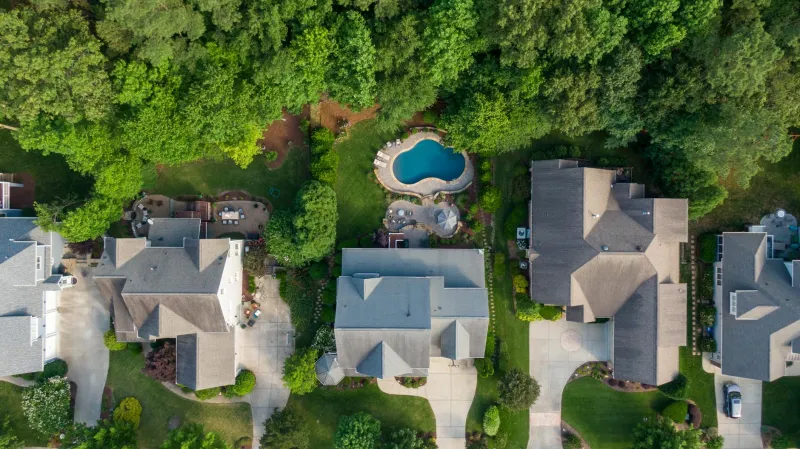
Drive through any American suburb today and you'll spot them everywhere: the telltale blue rectangles peeking over privacy fences, the sound of splashing echoing from backyards on summer afternoons. Swimming pools have become so ordinary that we barely notice them. But rewind to 1940, and what you'd find would shock you—a country where learning to swim meant either risking your neck in a murky quarry or belonging to the right social class.
When Swimming Was for Survivors and Socialites
Before World War II, most Americans learned to swim the hard way—if they learned at all. Farm kids jumped into irrigation ditches and farm ponds. City children made do with whatever water they could find: rivers that doubled as sewers, abandoned quarries filled with unpredictable currents, or if they were lucky, a roped-off section of a local lake.
The alternative was joining the country club set. Private swimming clubs dotted wealthy neighborhoods, complete with cabanas, poolside service, and strict membership requirements that kept out anyone who didn't fit the right profile. These weren't just about money—many clubs maintained explicit racial restrictions well into the 1960s, while others used "cultural fit" as code for keeping out immigrants and working-class families.
Public pools existed, but barely. Most cities had one or two municipal facilities, often segregated and chronically underfunded. The pools that did exist were frequently little more than concrete holes filled with questionable water and zero amenities. Swimming lessons? That was something rich kids got at summer camp.
The Suburban Pool Explosion
Everything changed when GIs came home from the war with pockets full of savings and heads full of dreams about the good life. The postwar economic boom coincided with a revolution in pool construction technology. Suddenly, what had once required teams of skilled craftsmen could be accomplished with prefabricated components and standardized designs.
By 1960, the backyard pool industry was exploding. Companies like Esther Williams Pools (named after the famous swimmer-actress) and Anthony Pools began mass-producing swimming pools like Detroit was churning out cars. The cost dropped from a luxury reserved for millionaires to something an upper-middle-class family could finance.
Suburban developers caught on fast. Entire neighborhoods began incorporating community pools as standard amenities. What had once been the exclusive domain of country clubs became a selling point for tract housing developments across America.
The Great Democratization
The real game-changer came in the 1970s and 1980s with the rise of municipal recreation departments and the above-ground pool revolution. Cities across America began building public aquatic centers—not the bare-bones facilities of earlier decades, but genuine recreation complexes with multiple pools, diving boards, and professional lifeguard programs.
Meanwhile, companies like Doughboy and Muskin made swimming accessible to families who couldn't afford in-ground installations. The above-ground pool became suburbia's great equalizer—for a few hundred dollars, any family with a backyard could give their kids what had once been reserved for the wealthy elite.
Swimming lessons moved from exclusive clubs to YMCA programs, community centers, and local recreation departments. The American Red Cross standardized swimming instruction, creating a nationwide system that taught millions of children the same basic strokes and water safety skills that had once been passed down informally or not at all.
The Numbers Tell the Story
The transformation was staggering. In 1950, fewer than 2,500 residential pools existed in the entire United States. By 1999, that number had exploded to over 4 million. Today, there are more than 10 million residential pools in America—roughly one for every 30 households.
Swimming participation rates tell an even more dramatic story. In 1960, surveys showed that fewer than 40% of American adults could swim well enough to save themselves in deep water. Today, that number exceeds 80%, with the biggest gains among groups that had been historically excluded from swimming opportunities.
What We Lost and Gained
This democratization came with trade-offs. The swimming holes and quarries where previous generations learned to navigate unpredictable water conditions largely disappeared, replaced by the controlled environment of chlorinated pools. Some argue we've raised a generation of swimmers who panic in natural water because they've only known the predictable depths of rectangular pools.
But what we gained was immeasurable: millions of children who learned water safety, countless families who found backyard recreation, and the destruction of barriers that had kept swimming exclusive for far too long.
The Ripple Effects
The pool revolution changed more than just recreational access—it transformed American childhood itself. Summer camps, once the exclusive domain of wealthy families, became accessible to middle-class kids largely because swimming instruction was no longer a luxury skill. Competitive swimming exploded as local pools provided training facilities that had previously existed only at elite clubs.
Even our architecture changed. The backyard became an extension of the home, designed around the pool as a focal point for family life and entertaining. Entire industries—from pool maintenance to poolside furniture—emerged to serve this new reality.
The Legacy of Blue Water
Today's parents taking their kids to swimming lessons at the local community center probably don't realize they're participating in one of America's most successful democratization stories. What began as a privilege of birth became an expectation of childhood—the kind of transformation that defines the American promise at its best.
The next time you hear the splash of kids jumping into a backyard pool, remember: that sound represents the victory of an entire generation who refused to accept that some pleasures should remain forever out of reach.