The Corner Where Everyone Knew Your Name
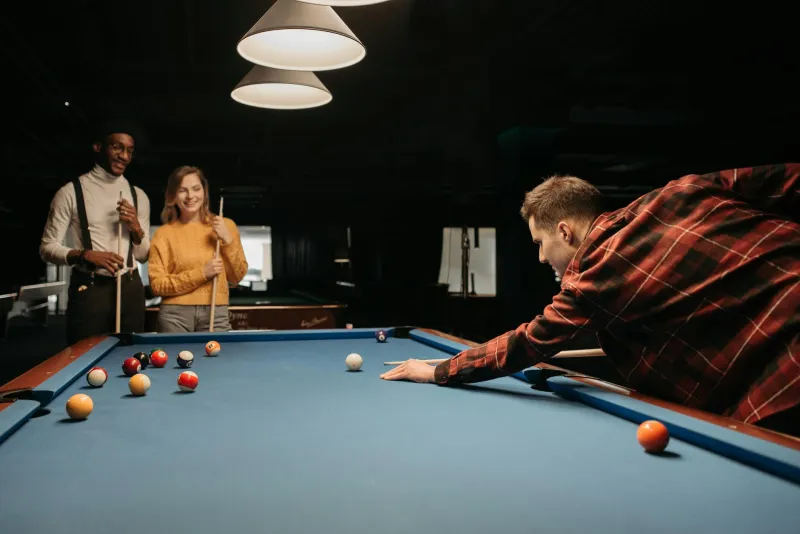
Every Tuesday night in 1967, Frank Kowalski walked three blocks from his house in Cleveland to Sal's Pool Hall, where the same eight guys had been meeting for the better part of a decade. They weren't friends in the modern sense — most barely knew each other's last names. But for two hours every week, they shared stories, argued about the Indians' pitching staff, and played nine-ball for quarters while the jukebox cycled through Sinatra and Motown.
Frank didn't schedule these meetings on his phone or coordinate through group chats. He just showed up, knowing the others would too. The pool hall wasn't just entertainment — it was infrastructure for human connection, as reliable and essential as the corner grocery store.
That world has virtually disappeared. America once contained over 4,000 pool halls. Today, fewer than 1,000 remain. Bowling league participation has dropped 70% since its 1960s peak. The barbershops where men gathered to debate politics while waiting for haircuts have been replaced by chain salons where conversation is discouraged and appointments are mandatory.
The Architecture of Unplanned Friendship
Sociologist Ray Oldenburg coined the term "third places" to describe these informal gathering spots that weren't home (first place) or work (second place). In mid-century America, these spaces formed the backbone of community life: soda fountains where teenagers learned to flirt, VFW halls where veterans processed their experiences, neighborhood bars where factory workers unwound after shifts.
These weren't perfect places — many excluded women and minorities through formal rules or informal pressure. But they served a crucial function that we've struggled to replace: they created opportunities for spontaneous social interaction between people who might never otherwise meet.
Walk into a 1960s pool hall and you'd find construction workers shooting stick with insurance salesmen, retirees teaching college kids how to make bank shots, and strangers becoming acquaintances over the course of an evening. The shared activity — whether pool, bowling, or just nursing a coffee — provided natural conversation starters and comfortable silences.
When Bowling Was America's Social Network
The numbers tell a staggering story of social collapse. In 1963, nearly 8 million Americans belonged to bowling leagues — that's roughly one in 20 adults rolling strikes and spares in organized competition every week. Bowling alleys anchored strip malls across suburbia, hosting leagues for different demographics: housewives on Tuesday mornings, factory workers on Thursday nights, church groups on Sundays.
These leagues created what sociologists call "weak ties" — casual relationships that proved surprisingly important for everything from job opportunities to emotional support. Your bowling teammate might mention a job opening at his company, or offer to help move furniture, or simply provide a friendly face during difficult times.
By 2020, bowling league membership had collapsed to under 2 million participants. The remaining leagues skew heavily toward older Americans who remember when this was just how social life worked. Younger Americans increasingly view organized recreational activities as either too formal or too time-consuming for their algorithmic lifestyles.
The Barbershop as Information Hub
Before social media, American men got their news and opinions filtered through barbershop conversations. These weren't echo chambers — neighborhood barbershops served diverse clienteles who disagreed about everything from baseball trades to presidential politics. But they argued face-to-face, with the civility that comes from knowing you'll see these people again next month.
Barber Tony Ricci ran the same shop in South Philadelphia for 43 years, cutting hair for three generations of the same families. His shop served as an informal community center where men learned about job openings, shared parenting advice, and debated current events while waiting their turn in the chair. When Tony retired in 2019, the building became a chain salon with individual stations and no waiting area.
"Nobody talks anymore," Tony observed. "They just stare at their phones until it's their turn, then leave. We used to solve the world's problems in here every Saturday morning."
The Algorithm Killed Serendipity
Modern Americans have replaced these physical third places with digital alternatives that promise greater convenience and efficiency. Why spend Tuesday nights at a pool hall when you can connect with like-minded people through Facebook groups, Discord servers, or specialized apps for every conceivable interest?
But algorithmic social networking creates fundamentally different relationships. Online communities tend toward homogeneity — you connect with people who already share your interests, opinions, and backgrounds. The beautiful randomness of striking up a conversation with a stranger at the lunch counter gets lost when every interaction is pre-filtered for compatibility.
Dating apps exemplify this transformation. Previous generations met romantic partners through extended social networks — friends of friends encountered at parties, coworkers introduced through office relationships, or chance meetings at community events. Modern dating requires active curation: swiping through profiles, scheduling meetings, and managing multiple conversations simultaneously.
What We Gained and Lost
Digital social networks offer undeniable advantages. They connect people across geographic boundaries, provide support for niche interests and identities, and allow introverts to socialize on their own terms. LGBTQ+ Americans, in particular, have benefited enormously from online communities that provide acceptance unavailable in their physical neighborhoods.
But we've also lost something irreplaceable: the art of unplanned conversation with people unlike ourselves. Frank Kowalski's Tuesday night pool games included a police officer, a steelworker, a small business owner, and a retired teacher. They disagreed about almost everything but found common ground over shared activities and mutual respect developed through regular interaction.
Modern Americans increasingly sort themselves into ideological and economic silos, both online and offline. We live in neighborhoods with people like us, work with people who think like us, and socialize through platforms that reinforce our existing beliefs.
The Search for New Third Places
Some communities are experimenting with modern versions of traditional gathering spaces. Board game cafes, maker spaces, and community gardens attempt to recreate the spontaneous social interaction that pool halls once provided. But these tend to attract educated, middle-class participants — they haven't replaced the truly democratic mixing that characterized mid-century third places.
The challenge isn't just architectural but cultural. Americans have become accustomed to scheduled, purpose-driven social interaction. The idea of regularly showing up somewhere just to see who else appears feels inefficient, even wasteful, compared to targeted digital networking.
Yet surveys consistently show rising levels of loneliness and social isolation, particularly among younger Americans who've never experienced the casual community connection that previous generations took for granted. We've optimized social interaction for efficiency and lost the beautiful messiness of unplanned human encounter.
Frank Kowalski's Tuesday night pool games weren't just recreation — they were democracy in action, community building through shared activity, and friendship formation through repeated low-stakes interaction. We replaced that infrastructure with friend requests and group chats, but something essential was lost in translation.