Before Starbucks Conquered America, Your Corner Drugstore Had the Best Hangout Spot in Town
Walk into any Starbucks in America today and you'll see the same scene: people hunched over laptops, earbuds blocking out the world, paying $5.50 for coffee drinks that didn't exist 30 years ago. But before corporate coffee culture colonized every strip mall and street corner, America had a different kind of gathering place — one where a nickel bought you a Coca-Cola and the conversation was free.
The American soda fountain was the original "third place" — neither home nor work, but somewhere in between where communities actually formed. What we lost when these disappeared wasn't just a business model. It was a way of life.
The Accidental Social Revolution
The soda fountain started as a medical curiosity in the 1830s. Pharmacists began mixing carbonated water with various syrups and extracts, believing the fizzy concoctions had healing properties. Dr. Pepper, Coca-Cola, and Pepsi-Cola all began as patent medicines sold at drugstore soda fountains.
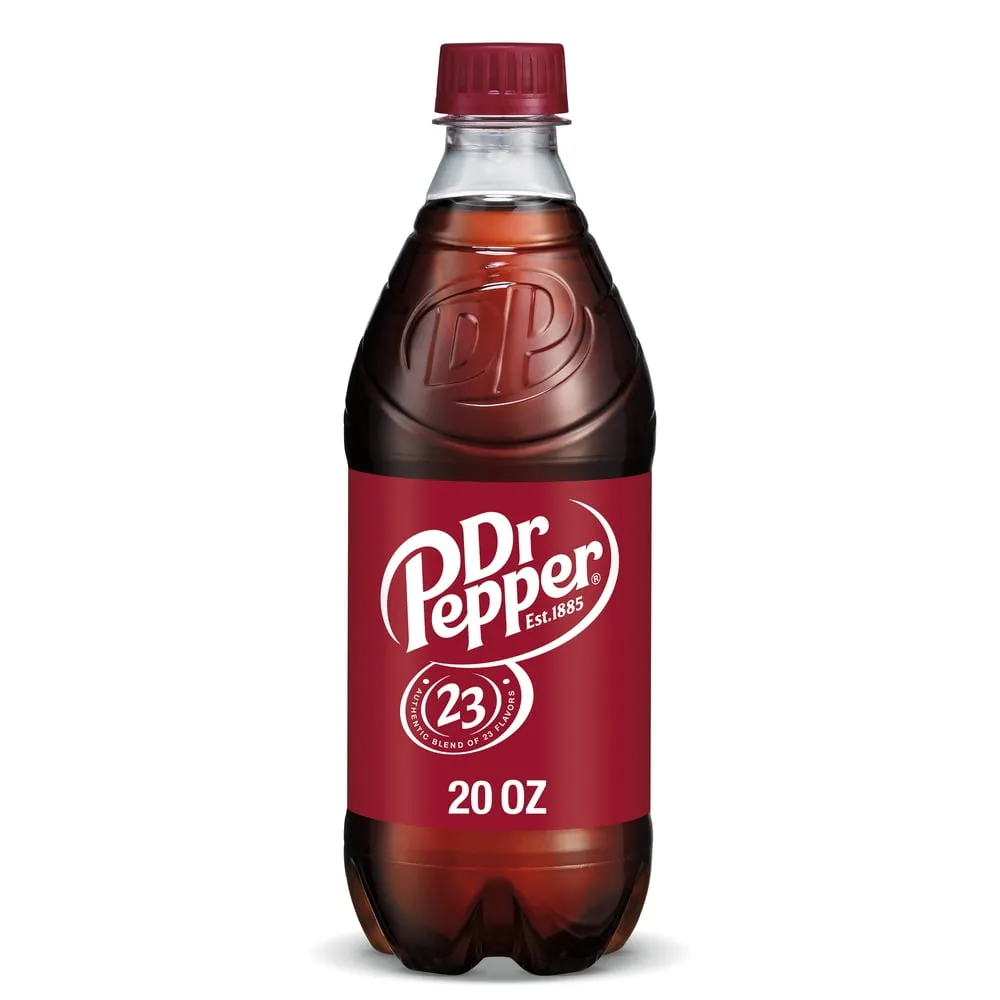 Photo: Dr. Pepper, via i5.walmartimages.com
But something unexpected happened. People didn't just come for the supposed health benefits — they came for the experience. The soda fountain counter became the town's unofficial social headquarters. Unlike saloons, which excluded women and children, soda fountains welcomed everyone. A businessman could grab a phosphate before work, teenagers could share a sundae after school, and families could treat themselves to ice cream on Sunday afternoons.
By 1900, nearly every American drugstore had a soda fountain. The counter wasn't just furniture — it was infrastructure for democracy. Local news was shared, gossip was exchanged, and strangers became neighbors over cherry Cokes and lime rickeys.
The Golden Age of the Five-Cent Social Life
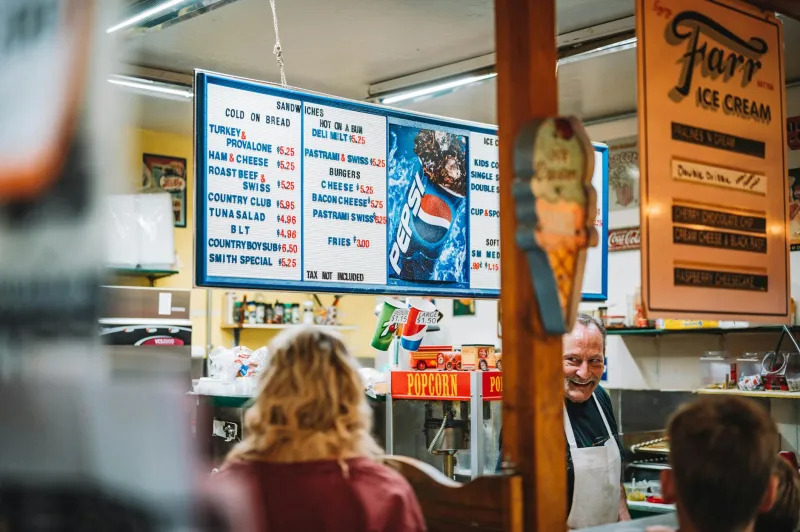
The soda fountain reached its cultural peak between 1920 and 1950. During this era, the "soda jerk" — the person who operated the fountain — became a genuine American folk hero. These weren't minimum-wage workers going through the motions. They were performers, entertainers, and unofficial mayors of their neighborhoods.
A skilled soda jerk could flip glasses, create elaborate sundaes, and remember exactly how every regular customer liked their drink. They knew who was dating whom, whose business was struggling, and which teenagers needed a gentle lecture about staying in school. The counter was their stage, and the community was their audience.
The economics were radically different from today's coffee culture. A Coca-Cola cost 5 cents from 1886 to 1959 — nearly 75 years of stable pricing. Adjusted for inflation, that nickel Coke would cost about 50 cents today. Compare that to a $3.50 Starbucks coffee, and you begin to understand how dramatically the economics of social gathering have changed.
More importantly, the soda fountain was embedded in a business that served the community's daily needs. The same place where you picked up your prescription, bought your toothbrush, and met your friends was also where you could grab a quick lunch or celebrate a special occasion. It was convenience and community in one location.
The Death of Authentic Gathering
Several forces conspired to kill the American soda fountain. The rise of suburban shopping centers in the 1950s and 1960s drew customers away from downtown drugstores. Fast food chains offered cheaper, faster alternatives to fountain lunches. Air conditioning made it less appealing to linger over a cold drink. Television gave people entertainment at home.
But the final blow was economic. As healthcare became more complex and regulated, independent pharmacies couldn't compete with chain drugstores that focused purely on efficiency. The soda fountain, which required space, equipment, and skilled labor, became an expensive luxury that chain stores couldn't justify.
By 1970, most American soda fountains had disappeared. A few survive today as nostalgic curiosities, but they're museum pieces rather than living community institutions.
The Corporate Replacement
Into this void stepped the coffee shop chains. Starbucks, which began as a single store in Seattle in 1971, has grown into a 30,000-location empire that has fundamentally changed how Americans think about public gathering places.
On the surface, Starbucks seems to offer what soda fountains once provided: a comfortable place to meet friends, conduct business, or simply spend time outside the home. But the similarities are superficial. Where soda fountains were local institutions run by neighbors, coffee chains are global corporations run by algorithms.
The economic model is inverted. Soda fountains made money by serving the community's daily needs and offering social space as a free bonus. Coffee chains make money by selling expensive drinks to people who use their space as an office. The average Starbucks customer spends $4.50 per visit and occupies space for hours. The average soda fountain customer spent 25 cents (in today's money) and lingered just long enough to catch up with neighbors.
What Money Can't Buy Back
The transformation from soda fountains to coffee chains reflects broader changes in American society. We've replaced authentic community gathering places with corporate-branded social spaces. We've traded affordable daily luxuries for expensive lifestyle statements. We've substituted local ownership for global franchise models.
Most significantly, we've lost the art of casual social interaction. Soda fountains forced different generations and social classes to share the same counter. A farmer, a banker, and a teenager might find themselves sitting side by side, creating opportunities for the kind of random social connections that build community resilience.
Today's coffee shops, despite their communal appearance, are actually designed for individual productivity. People come to work alone together, not to engage with strangers. The shared experience has been replaced by parallel isolation.
The True Cost of Progress
Nobody argues that we should return to the 1940s. Modern pharmacies are more efficient, food safety standards are higher, and we have access to conveniences that previous generations couldn't imagine. But in optimizing for efficiency and scale, we've lost something irreplaceable: places where community happened naturally, without effort or intention.
The next time you're sitting in a Starbucks, paying $6 for a drink whose name would have been incomprehensible to your grandfather, consider what that same $6 could have bought at the old corner drugstore. Not just a week's worth of sodas, but admission to a daily social ritual that helped build the kind of communities we now pay consultants millions of dollars to try to recreate.
Some progress comes with hidden costs. The death of the American soda fountain was one of them.