The Manual Was Forty Pages Long and You Actually Read It — Now Nobody Knows How Anything Works
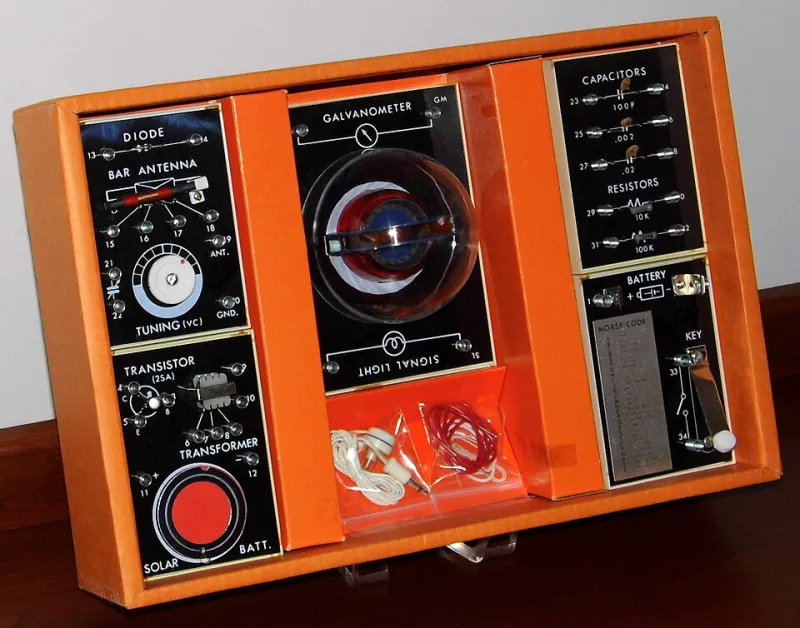
Photo: Joe Haupt from USA, CC BY-SA 2.0, via Wikimedia Commons
Somewhere in the garage, maybe in a box that hasn't been opened since the Clinton administration, there's a manual for a VCR. It's probably forty or fifty pages long. There are diagrams. There are numbered steps. There are warnings in three languages. Someone at the company that made that device sat down and wrote out, in genuine detail, exactly how the machine worked and what you were supposed to do with it.
And the assumption behind all of that was remarkable: that you, the person who bought this thing, were capable of understanding it.
When Owning Something Meant Knowing Something
For most of the twentieth century, consumer products came with a certain expectation of engagement. A new appliance arrived with documentation. A stereo receiver had a diagram showing you what each input and output actually did. A camera came with an explanation of aperture, shutter speed, and exposure — not because the manufacturer wanted to be educational, but because you genuinely needed that information to use the product correctly.
This wasn't just about electronics. A new lawnmower came with a maintenance schedule. A car owner's manual told you how to check the timing belt, not just where to put the gas. The implicit contract between manufacturer and consumer included the idea that the consumer would take some responsibility for understanding what they'd purchased.
And people did. Not everyone became an expert, but most households had at least one person who could troubleshoot a flickering TV, replace a fuse, or figure out why the washing machine was making a noise it shouldn't. The knowledge wasn't deep, but it was real. You had some idea of what was going on inside the things you owned.
Repair shops existed for the stuff that was genuinely beyond you — but plenty of things got fixed at home first. Hardware stores sold components. Electronics shops sold replacement parts. The assumption was that a broken thing might be fixable before it was disposable.
The Pivot to Intuitive — and What It Really Meant
The turn happened gradually, then all at once. The iPod in 2001 was an early signal: no manual required, no learning curve, just pick it up and use it. Steve Jobs made simplicity a design religion, and the rest of the industry followed. By the time smartphones became universal, the ideal device was one that required zero explanation. If you needed instructions, something had gone wrong with the design.
That philosophy produced genuinely elegant products. The iPhone really did work without a manual. The modern smart TV really is easier to navigate than the VCR ever was. The friction got removed, and removing friction is genuinely useful.
But here's what also got removed: the user's relationship to the object.
Today's devices are sealed systems. Literally, in many cases — glued shut, with no user-serviceable parts inside, a phrase that now appears so routinely in product documentation that nobody even registers it anymore. The battery can't be swapped. The components can't be accessed. If something goes wrong, your options are essentially: contact support, take it to an authorized service center, or buy a new one.
The troubleshooting guides that exist are mostly theatrical. Have you tried turning it off and back on again? Is it plugged in? These aren't diagnostic steps — they're placeholders that buy time until you give up and call someone who may or may not be able to help.
What We Actually Lost
The loss here isn't just practical, though the practical loss is real. It's also cognitive.
When you understand how something works — even partially, even approximately — you have a different relationship with it. You can reason about it. When it behaves unexpectedly, you have a mental model to consult. You can ask useful questions. You can evaluate whether a repair estimate is reasonable or whether you're being taken for a ride.
When you have no idea how something works, you're entirely dependent on whoever claims to know. That's a significant transfer of power, and it happens quietly across every device in your home.
There's also something worth naming about what this does to critical thinking more broadly. Learning to follow a technical manual — to read carefully, to understand cause and effect, to work through a process methodically — was a form of intellectual training that came bundled with everyday life. It wasn't glamorous, but it was real. Millions of Americans developed genuine problem-solving habits by working through the documentation that came with ordinary consumer products.
That incidental education has largely disappeared. Products are designed so that understanding them is unnecessary. Which sounds like progress, until you realize it means a generation of people who interact with the most powerful technology in human history without the faintest idea how any of it actually functions.
The Comfort of the Black Box
There's a reason this happened, and it's not entirely sinister. Complexity is hard. Most people genuinely didn't want to read a forty-page manual. The demand for simplicity was real, and the industry responded to it.
But there's a difference between making something easier to use and making it impossible to understand. The best tools in history — a good hand plane, a reliable mechanical watch, a well-designed carburetor — were both elegant and comprehensible. You could use them without knowing everything about them, but if you wanted to understand them, you could. They rewarded curiosity.
Today's devices mostly don't. They're designed to be operated, not understood. And the manual — if one exists at all — is a two-page quick-start card that tells you where the power button is and not much else.
The forty-page manual in your parents' garage wasn't just documentation. It was an invitation to actually know something. We stopped accepting those invitations a long time ago, and we've been a little less capable ever since.


