From Iron Arms to Pitch Counts: How Baseball Learned to Stop Destroying Its Best Players
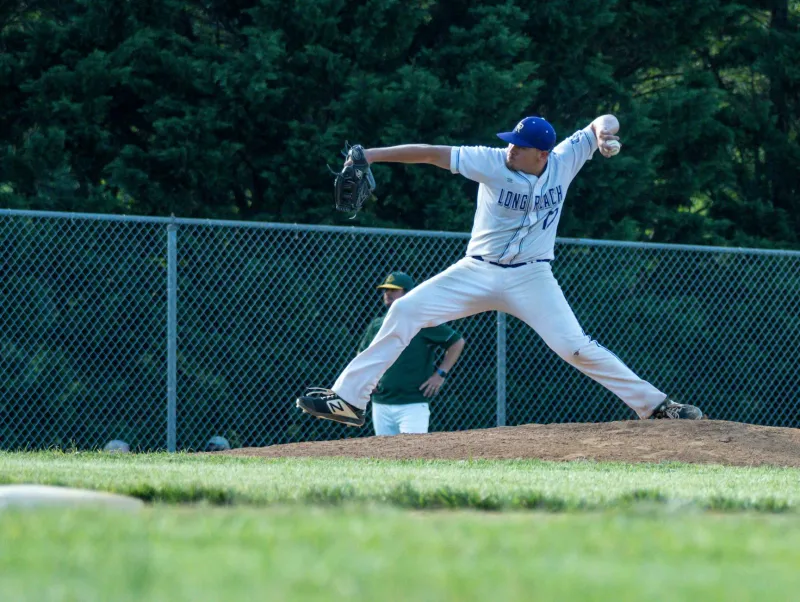
From Iron Arms to Pitch Counts: How Baseball Learned to Stop Destroying Its Best Players
Picture this: It's 1908. Amos Rusie isn't pitching tonight, but someone like him is — a man who will throw over 400 innings this season, complete nearly every game he starts, and show up ready to do it again four days later. His arm is not a carefully managed asset. It is a tool, used until it breaks.
Now picture a modern MLB dugout. A starter is pulled in the sixth inning, having thrown 94 pitches. The pitching coach explains, with complete sincerity, that this was the plan all along.
These two worlds are both called baseball. But the gap between them is enormous.
The Era Nobody Would Survive Today
In the early 1900s, complete games weren't a mark of excellence — they were the expectation. Pitchers like Cy Young, Jack Chesbro, and Ed Walsh didn't just start games; they finished them. Walsh threw 464 innings in 1908. Chesbro completed 48 of his 51 starts in 1904. These weren't outliers. They were the norm.
The concept of a "bullpen" existed, but it was mostly a place where lesser arms waited for mop-up duty. Relievers were not specialists. They were backups. Nobody talked about "protecting" a starter's arm, because the idea that an arm needed protecting hadn't really landed yet.
Rest between starts was minimal. Recovery science didn't exist. Trainers offered little more than rubdowns and encouragement. If your arm hurt, you pitched through it. If you couldn't pitch through it, someone else got your spot.
The human cost was real, even if nobody was counting it at the time. Careers ended early and suddenly. Arm injuries that today would be diagnosed, surgically repaired, and rehabbed over 12 to 18 months simply ended men's livelihoods without explanation. The pitcher just... stopped being effective, and everyone moved on.
The Slow Arrival of Caution
Things didn't change overnight. Through the mid-20th century, complete games were still common and starting pitchers were still expected to carry heavy workloads. But the seeds of change were being planted.
The rise of the relief specialist in the 1960s and 70s began shifting how teams thought about pitching. Managers started recognizing that a fresh arm in the late innings had real tactical value. The closer became a cultural figure. Then came the setup man, the lefty specialist, the long reliever — each role carving innings away from the starter's workload.
Sports medicine started catching up in the 1980s and 90s. Tommy John surgery, first performed in 1974, gave pitchers a path back from ulnar collateral ligament tears that previously ended careers. Paradoxically, knowing the surgery existed may have encouraged teams to push arms harder — but it also opened the door to understanding why arms were failing in the first place.
By the time biomechanics research arrived in earnest, the numbers told a troubling story. High pitch counts correlated with injury risk. Certain arm angles created more stress. Young pitchers were especially vulnerable. The sport had been ignoring all of this for a hundred years.
The Pitch Count Revolution
Today, the 100-pitch mark functions almost like a law of physics in professional baseball. Cross it, and you're asking for trouble. Modern starters are typically on a five-man rotation, averaging somewhere around 90 to 95 pitches per start, rarely going past the seventh inning. A complete game in 2024 is a headline.
Minor league systems now track pitch counts obsessively from the time a player is a teenager. High school coaches are trained to monitor workloads. Travel baseball organizations — for better or worse — have made arm care a talking point at every level of youth competition.
The science behind this shift is legitimate. Research from organizations like the American Sports Medicine Institute has repeatedly shown that exceeding certain workload thresholds dramatically increases injury risk, particularly for pitchers under 25. The data is hard to argue with.
But not everyone is convinced the pendulum has swung to the right place.
Did We Overcorrect?
There's a genuine debate in baseball circles about whether modern arm management has created a generation of pitchers who are less durable, not more. Some coaches and analysts argue that the human arm adapts to stress over time — and that by limiting workloads so severely, the sport is producing pitchers whose arms have never been conditioned to handle a meaningful push.
Tommy John surgery rates haven't dropped in the pitch-count era. They've gone up. That's not a simple statistic to interpret — better diagnostics, increased participation, and earlier detection all play a role — but it has given ammunition to those who question whether the modern approach is actually working.
Others point to specialization in youth sports. Kids who throw year-round, focusing exclusively on pitching from age 10, may be developing overuse injuries long before they reach professional rosters. The protection offered by pitch counts at the major league level doesn't address what's happening in travel leagues and showcases years earlier.
Two Versions of the Same Job
What's striking about this entire arc is how completely the definition of "pitcher" has been rewritten. The workhorse of 1908 would be almost unrecognizable to a modern pitching coach. The carefully managed six-inning specialist of today would baffle the managers of a century ago.
Both versions of the position exist within the same sport, carrying the same name, on the same field. But the physical expectations, the training philosophy, the recovery protocols, and the understanding of the human arm itself are entirely different.
Baseball didn't just change how pitchers work. It changed how the sport thinks about the human body — slowly, imperfectly, and with a century of unnecessary damage along the way.
The arm that threw 400 innings in 1908 is a ghost story now. Whether that's progress or overcaution probably depends on who you ask. But it's one of the most dramatic quiet transformations in the history of American sport — and most fans have never stopped to notice it.