The Blue-Collar Deal That Built Suburban America — And Quietly Disappeared
Ray Kowalski worked the night shift at a Chevy plant outside Detroit for thirty-one years. He bought a three-bedroom house in 1961. He took his family to Mackinac Island every August. He put two kids through state college. He retired at 62 with a pension and health coverage that lasted the rest of his life. He did all of this — every single bit of it — on one factory wage, without a college degree, and without his wife needing to work outside the home.
 Photo: Mackinac Island, via i.pinimg.com
Ray's story isn't remarkable. In the postwar decades, it was just what manufacturing work looked like in America. The factory floor was the engine of the middle class, and the deal it offered — hard work in exchange for genuine economic security — was real, enforceable, and widely available.
That deal is gone. And understanding how it vanished tells you more about modern American economic anxiety than almost anything else.
What the Factory Floor Actually Paid
Let's be specific about numbers, because the specifics are what make this hit hardest.
In 1965, the average unionized auto worker earned roughly $8,000 a year. Adjusted for inflation, that's somewhere around $77,000 in today's dollars — a wage that would comfortably qualify as middle-class income by any modern measure. But the wage itself only tells part of the story. What came with it was equally transformative.
Union contracts in the 1950s and 60s typically included fully employer-paid health insurance for the whole family, defined-benefit pension plans that guaranteed a monthly check for life after retirement, paid vacation time that started at two weeks and grew with seniority, and job security provisions that made it genuinely difficult to lay off a worker without cause. Some contracts included tuition assistance. Many included cost-of-living adjustments that automatically raised wages when inflation hit.
The package, taken together, was extraordinary. A worker with a high school diploma and a willingness to show up reliably could build a life that looked — by almost every measure — identical to what a mid-level office professional was building. The factory gate was a genuine on-ramp to stability.
And critically, housing was affordable enough that a single income could actually cover it. The median home price in 1960 was around $11,900 — roughly twice the median annual household income. Today that ratio has more than tripled in most American cities.
Three Things That Broke the Bargain
The collapse of the blue-collar deal didn't happen because of one villain or one bad policy decision. It happened because three massive forces arrived at roughly the same time and reinforced each other.
Automation came first, and it came fast. Starting in the 1970s and accelerating through the 1980s and 90s, industrial robots and computer-controlled machinery began replacing the repetitive physical tasks that had employed millions of workers. Assembly lines that once required forty hands could run with twelve. The jobs didn't disappear all at once — they thinned out steadily, year after year, plant by plant.
Offshoring compounded the damage. As trade agreements opened global markets, manufacturers discovered they could produce goods in Mexico, then China, then Vietnam, at a fraction of the domestic labor cost. Entire industries — steel, textiles, electronics assembly, furniture manufacturing — hollowed out over the span of two decades. Cities that had built their identity around a single industry watched it evaporate. Youngstown. Gary. Flint. The names became shorthand for a particular kind of American loss.
Union decline was the third leg of the collapse, and in some ways the most consequential for workers who stayed employed. Union membership among private-sector workers peaked at around 35 percent in the mid-1950s. Today it sits below 6 percent. As unions lost members and political leverage, their ability to negotiate the full package — wages, benefits, job security, cost-of-living protections — eroded dramatically. The contracts that remained grew leaner with each negotiation cycle.
By the time these three forces had fully worked through the economy, the math of factory work had fundamentally changed.
The Modern Manufacturing Worker
Here's the part that tends to surprise people: American manufacturing didn't disappear. The United States still produces more manufactured goods by value than almost any country on earth. Factories are still running. Workers are still punching in.
But the terms of employment look almost nothing like Ray Kowalski's contract.
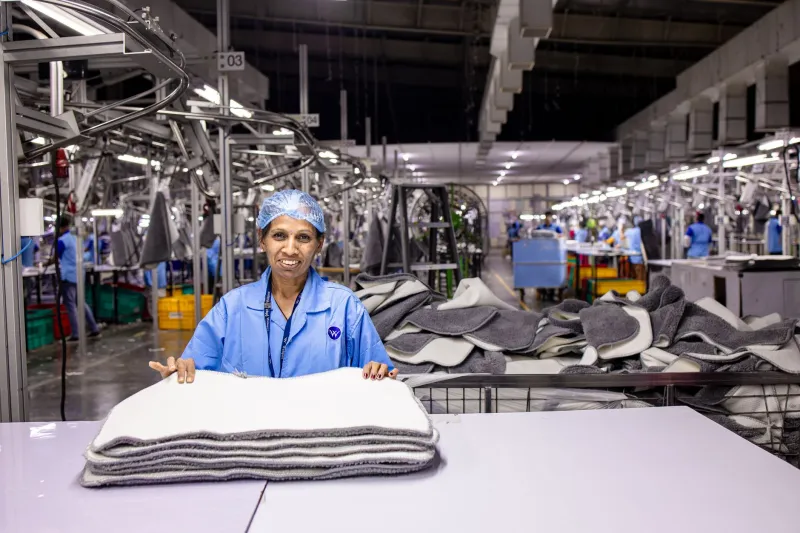
The median manufacturing worker today earns about $45,000 a year — which sounds reasonable until you account for what's no longer included. Health insurance, if offered, typically requires significant employee contributions. Defined-benefit pensions are nearly extinct in private industry, replaced by 401(k) plans that shift investment risk entirely onto the worker. Many manufacturing jobs are now filled through staffing agencies, which means workers have no direct employment relationship with the company and can be let go without notice or severance.
A 2019 study found that a meaningful percentage of Amazon warehouse workers — a major category of modern blue-collar employment — qualified for SNAP benefits despite working full time. The factory job that once kept a family comfortably above the economic waterline now often leaves them treading water.
What America Chose Not to Notice
There's a reason this shift didn't generate more alarm as it happened. The 1990s and 2000s brought cheap consumer goods, a booming stock market, and rising home values that made many Americans feel wealthier even as their actual wages stagnated. If you owned a house and a 401(k), the economic picture looked okay from the outside.
But for the workers who had built their lives around the blue-collar bargain — and for their children who expected to inherit it — the picture was very different. The ladder that Ray Kowalski climbed was quietly dismantled, one rung at a time, while the country was looking somewhere else.
The night shift still runs. The floors are still humming. But the deal that once came with it — the house, the vacation, the pension, the dignity of knowing your labor was genuinely enough — that's the part that didn't make it to the modern era.