A Filling Used to Cost Less Than a Haircut: How Dentistry Became America's Most Unaffordable Doctor Visit
A Filling Used to Cost Less Than a Haircut: How Dentistry Became America's Most Unaffordable Doctor Visit
Picture this: it's 1958, and your dad gets a toothache on a Tuesday. By Thursday, he's sitting in Dr. Henderson's chair on Main Street, getting a filling for about $3. He pays cash from his wallet, chats with the receptionist he's known for a decade, and stops for a milkshake on the way home. Total damage to the family budget? Less than a tank of gas.
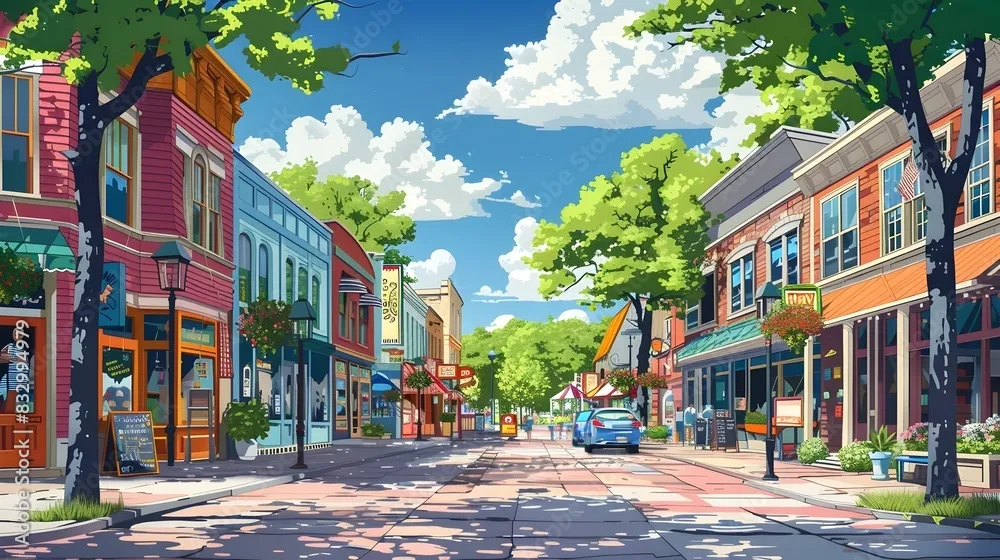 Photo: Main Street, via as2.ftcdn.net
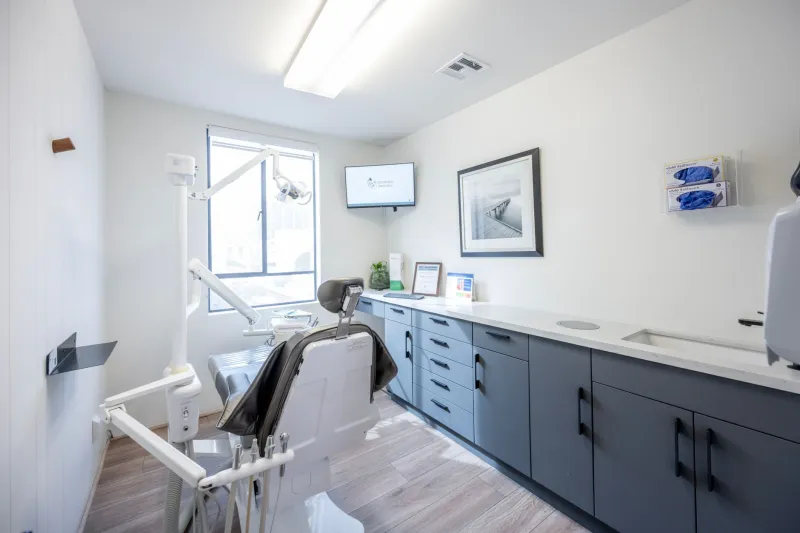
Now picture the same scenario today. That toothache turns into a Google search, a two-week wait for an appointment, and a treatment estimate that starts at $300 for a basic filling — and climbs toward $1,500 if the tooth needs a crown. If you don't have dental insurance, you're paying every cent yourself. And if you do have insurance, you're probably still covering half. Millions of Americans have made the same quiet calculation: just live with the pain.
Something fundamental changed in American dentistry over the past seventy years. It didn't just get more expensive — it moved from the category of "routine neighborhood service" to "luxury healthcare," and most of us barely noticed it happening.
What the Dentist's Office Used to Look Like
In the postwar decades, dental care was woven into the ordinary fabric of American family life. Your dentist was a neighborhood fixture, often operating out of a modest office above a hardware store or beside the town pharmacy. He knew your kids by name. His fees were posted on a small card at the front desk, and they were designed to be manageable for working families.
Adjusted for inflation, a basic filling in 1955 cost somewhere in the range of $30 to $40 in today's dollars. A full extraction might run $50. Even a full set of dentures — a major procedure — typically came in under $200 in inflation-adjusted terms. These weren't bargain-basement prices driven by poor care. Dentists were trained professionals earning solid middle-class livings. The economics just worked differently.
Dental school was also far cheaper to attend, which meant dentists weren't carrying six-figure student loan debt into their practices. Overhead was lower. Malpractice insurance was minimal. And because dentists owned their own small offices rather than operating inside corporate healthcare systems, they had flexibility to set prices that fit their communities.
Most families went to the dentist twice a year. It wasn't a big deal. It was just what you did.
When the Math Stopped Working
The shift didn't happen overnight. Through the 1970s and into the 1980s, dental costs began climbing faster than general inflation. New equipment — X-ray machines, sterilization systems, better tools — raised overhead. Dental school tuitions rose sharply as universities expanded professional programs. Malpractice costs crept up. And unlike general medicine, dentistry largely stayed outside the Medicare and Medicaid systems, meaning there was no government pricing floor or coverage backstop for most Americans.
That last point is critical. When Medicare launched in 1965, it explicitly excluded dental care — a decision that seemed minor at the time but turned out to be enormously consequential. Dental coverage was left to the private insurance market, which meant employers could offer it, skip it, or offer bare-bones plans with strict annual caps. Most dental insurance plans today cap benefits at $1,000 to $1,500 per year — a ceiling that hasn't meaningfully changed since the 1970s, even as individual procedures have tripled in cost.
Meanwhile, the rise of corporate dental chains changed the feel of the industry. The neighborhood dentist who owned his practice and set his own fees gradually gave way to franchise operations with standardized pricing, upselling protocols, and investor expectations to meet. Care quality isn't necessarily worse — but the personal economics shifted dramatically.
The Numbers Nobody Wants to Say Out Loud
Here's where things get genuinely startling. According to the CDC, more than 1 in 4 American adults have untreated tooth decay. Around 68 million Americans have no dental insurance at all. And a 2023 survey found that nearly half of all adults skipped a dentist visit in the past year specifically because of cost.
A single dental crown — something millions of Americans need at some point in their lives — now runs between $1,000 and $1,700 depending on location and provider. A root canal can top $1,500 before the crown even goes on. A full set of implants, which have become the modern alternative to dentures, can cost $30,000 or more. These aren't elective luxuries. These are basic functional needs.
For comparison, that $3 filling your grandfather got in 1958 represented roughly two hours of his factory wages. The equivalent filling today — at $300 — represents closer to fifteen hours of work at the median American wage. The math got dramatically worse, and it got worse specifically for working-class and middle-class families.
What We Actually Lost
It's tempting to frame this as pure economics, but there's a cultural dimension worth acknowledging. When dentistry was affordable and neighborhood-based, oral health was genuinely democratized. Rich families and working-class families sat in similar waiting rooms and got similar care. The dentist was a community figure, not a specialist you needed a referral and a payment plan to access.
Today, the condition of someone's teeth has become one of the clearest visible markers of economic class in America. Researchers have documented it. Employers notice it in job interviews. The phrase "meth mouth" entered the cultural vocabulary as shorthand for poverty — even though untreated dental decay is mostly a story about cost, not character.
Somewhere between Dr. Henderson's Main Street office and the $1,500 crown, dentistry stopped being something America did together and became something you could afford or you couldn't. That's a bigger change than just a price increase. That's a shift in what kind of country we decided to be — and most of us didn't even realize we were making the decision.