The Folded Paper on Your Doorstep Knew Your Town Better Than Any Algorithm Ever Will

There was a ritual to it. The thwack of the paper hitting the porch. The smell of ink when you unfolded it. The front page that told you — in the same order it told every other person in your zip code — what had happened overnight. City council vote. High school football scores. Weather. A factory closing two towns over.
You didn't choose the front page. Nobody asked what kind of news you preferred. The editor chose it, and you read it, and so did your neighbor, and your boss, and the woman who ran the diner on Fifth Street. For better or worse, you all started the day with the same information.
 Photo: Fifth Street, via m.media-amazon.com
That shared experience is gone now. And we are only beginning to understand what we lost when it left.
The Editor Who Lived Next Door
The American daily newspaper at its mid-century peak was a genuinely local institution. Not just in a sentimental way — structurally, financially, editorially local. The reporters covered the city they lived in. The editor-in-chief went to the same church as half his sources. The publisher knew the mayor personally and sometimes hated him, which was exactly the right dynamic for accountability journalism.
In 1945, there were roughly 1,750 daily newspapers in the United States. Most mid-sized American cities had at least two competing papers — a morning edition and an afternoon edition, often with different political leanings. The competition kept both honest, or at least kept both trying. Readers who thought the morning paper was too soft on City Hall could pick up the afternoon edition and get a different take.
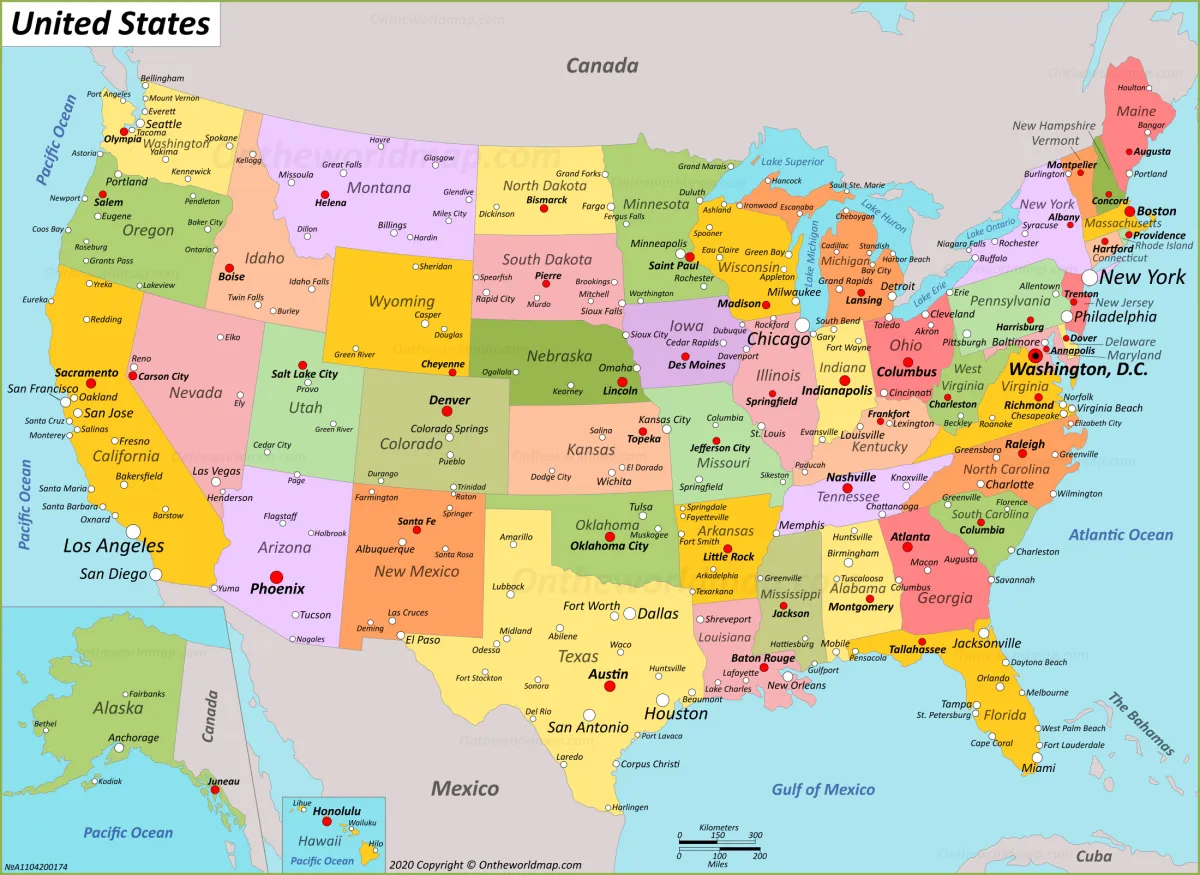 Photo: United States, via ontheworldmap.com
 Photo: City Hall, via c.pxhere.com
News curation was a human act performed by people with professional reputations, community ties, and the knowledge that they'd run into their readers at the hardware store on Saturday. That accountability wasn't always sufficient — newspapers had their own biases, their own blind spots, their own cozy relationships with local power. But the editor who buried an important story had to live in the town where the story happened. That constraint mattered.
The Coin Box on the Corner Was a Democratic Institution
Beyond the home delivery subscriber, there was the newspaper box — that metal stand on the corner outside the barbershop, the diner, the bus stop. Drop in a dime, or later a quarter, pull out a paper. The same paper everyone else was pulling out.
There was something quietly democratic about that object. It didn't know if you were a Democrat or a Republican. It didn't know if you'd clicked on a story about immigration yesterday and therefore should be shown more immigration stories today. It offered one product to every person who walked past, regardless of their prior behavior, their demographic profile, or their psychological vulnerabilities.
The coin box was, in a very literal sense, the opposite of a personalized feed. It was a shared civic object. The news inside it was the news. Not your news. Not news calibrated to keep you emotionally activated. Just news.
What the Algorithm Actually Optimizes For
Here's the thing about algorithmic news feeds that the companies behind them are careful never to say plainly: they are not designed to inform you. They are designed to retain your attention. Those are not the same goal, and they frequently conflict.
Engagement — the metric that drives everything on social platforms — correlates strongly with emotional arousal, particularly negative emotional arousal. Anger. Outrage. Fear. Moral indignation. These emotions cause people to stop scrolling, to comment, to share. The algorithm learns this about you individually, then feeds you more of whatever triggered that response last time.
The result is a news experience that is technically personalized but functionally manipulative. You are not being shown what is most important. You are being shown what is most likely to make you feel something strong enough to keep looking at the screen. Stories that generate calm, informed understanding don't perform well. Stories that make you furious about something a politician said, or terrified about a trend that may or may not affect you, perform extremely well.
The morning newspaper had biases. Every editor made judgment calls. But no editor in 1962 sat down and thought: how do I maximize the amount of time this reader spends in a state of agitated attention? That framing didn't exist, because the business model didn't require it.
The Local News Collapse Made Everything Worse
Between 2005 and 2023, the United States lost more than 2,900 local newspapers. Roughly a third of all the local papers that existed at the dawn of the internet age are gone. About 200 counties in America now have no local news source at all — no paper, no local TV station, no digital outlet covering the city council, the school board, the courts.
Research from the University of North Carolina found that communities that lose their local newspaper see measurable increases in municipal borrowing costs, lower voter turnout in local elections, and reduced civic engagement across the board. The newspaper wasn't just delivering information. It was doing civic infrastructure work that nothing has replaced.
Into that vacuum rushed national partisan media, social platforms, and the algorithm. People who once read about their town's zoning disputes and school budget arguments now consume a diet of national outrage content that has nothing to do with their daily lives and no connection to the community they actually live in.
Something Worth Grieving
This isn't nostalgia for a perfect past. Mid-century newspapers were often racist in their coverage, dismissive of women, friendly to power in ways that served nobody but the powerful. The democratization of information that the internet enabled is genuinely valuable.
But there was something the folded paper on the doorstep provided that no one has successfully rebuilt online: a shared starting point. A common set of facts, chosen by fallible but accountable human beings, delivered to everyone in a community simultaneously. A ritual that said, implicitly, we all live here together and this is what happened yesterday.
The algorithm doesn't know where you live. It doesn't care. It knows what made you angry last Tuesday, and it's going to give you more of that today.
The coin box on the corner never knew anything about you at all. In retrospect, that was the whole point.