The Mom-and-Pop Motor Lodge Where America Used to Sleep: How Chain Hotels Killed the Roadside Family Business
Where the Road Led to Real People
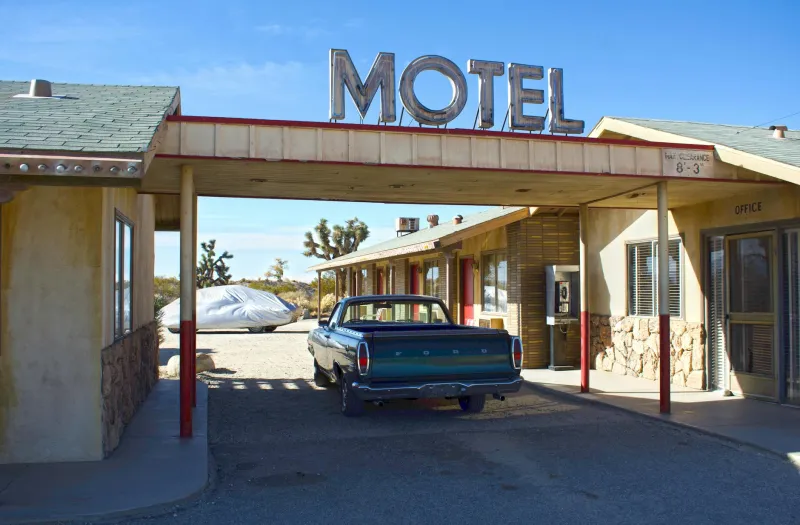
The Sleepy Time Motor Court sat on Route 66 outside Flagstaff, Arizona, like a small village designed for strangers. Twelve adobe-style cabins surrounded a central office where Mabel Henderson served coffee from 6 AM until the last guest checked in. Her husband Frank maintained the grounds, fixed broken air conditioners, and knew every shortcut to the Grand Canyon.
Guests didn't just get a room — they got Mabel's recommendations for the best diner in town, Frank's warning about the construction on Highway 40, and breakfast conversations with other travelers at the communal table outside the office. The Sleepy Time wasn't just a place to sleep. It was a temporary community where the road brought people together.
Today, that stretch of highway is lined with Hampton Inns, Comfort Suites, and La Quinta hotels. You can book them online, check in with an app, and never speak to another human being. The efficiency is remarkable. The predictability is comforting. But something irreplaceable was lost when America's mom-and-pop motor courts disappeared.
The Golden Age of the Family-Run Road
Between the 1930s and 1960s, America's expanding highway system was dotted with thousands of independently owned motor courts, tourist camps, and roadside lodges. These weren't primitive accommodations — they were small businesses built by families who saw opportunity in America's growing love affair with automobile travel.
The typical motor court was owned and operated by a husband-and-wife team who lived on the property year-round. They knew every regular customer, remembered anniversary trips, and treated their establishment like an extension of their home. Many served meals in small dining rooms where guests shared tables and swapped stories about the road.
These places had personality because they were reflections of the people who ran them. The Wigwam Village motels were shaped like teepees. The Coral Court in St. Louis featured Art Deco design and garages attached to every room. Ma and Pa Kettle's Tourist Camp in the Ozarks served fried chicken dinners that travelers would drive 50 miles out of their way to experience.
The Standardization Revolution
Everything changed when Kemmons Wilson opened the first Holiday Inn in Memphis in 1952. Wilson's insight was simple: travelers wanted predictability. Instead of rolling the dice on Mom's Diner or the Breezy Inn, families wanted to know exactly what they were getting before they pulled into the parking lot.
Holiday Inn promised standardized rooms, consistent service, and amenities that independent operators couldn't match: swimming pools, air conditioning, and free ice. The company's "Great Sign" became a beacon of reliability on the American highway, promising weary travelers that this stop would be exactly like the last one.
The model was so successful that it spawned dozens of imitators: Best Western, Ramada Inn, Howard Johnson's, and eventually the massive chains that dominate today's roadside landscape. By the 1970s, the writing was on the wall for independent motor courts.
What Efficiency Couldn't Replicate
Chain hotels won the battle for America's traveling public by solving real problems. They offered consistent quality, professional management, and amenities that family operations couldn't afford. But they also eliminated the human element that made roadside lodging feel like more than just a transaction.
At a motor court, the owner had a personal investment in your experience. If your air conditioner broke, Frank would fix it himself — often in the middle of the night. If you needed directions to a good restaurant, Mabel would call her friend who ran the café down the road and make sure they saved you a piece of pie.
The breakfast conversation at motor courts was legendary among regular travelers. Salesmen would share tips about which towns were worth visiting. Families would swap recommendations about roadside attractions. Honeymooners would get advice from couples celebrating their 30th anniversary.
Chain hotels replaced this intimacy with efficiency, but efficiency isn't always what travelers remember. Nobody writes postcards home about the excellent Wi-Fi at the Hampton Inn. But thousands of Americans still remember the night they spent at some long-forgotten motor court where the owner's dog slept on their cabin porch and the coffee was strong enough to wake the dead.
The Economics of Extinction
Independent motor courts didn't disappear because they were bad businesses — they disappeared because they couldn't compete with the economies of scale that chain operations offered. Holiday Inn could negotiate better rates with suppliers, advertise nationally, and offer amenities that required massive capital investment.
More importantly, chains could offer something that independent operators never could: a reservation system. By the 1960s, travelers could call a single number and book rooms at Holiday Inns across the country. Independent operators were left hoping that travelers would take a chance on an unfamiliar name.
The final blow came with the interstate highway system, which bypassed many of the two-lane roads where motor courts thrived. When I-40 replaced Route 66, the Sleepy Time Motor Court found itself two miles from the nearest exit ramp, watching traffic flow past at 75 miles per hour toward the bright signs of chain hotels clustered around highway interchanges.
What the Open Road Used to Promise
The death of the independent motor court represents something larger than just a shift in the hospitality industry. It marks the end of an era when travel was about more than just getting from Point A to Point B efficiently.
In the motor court era, the journey itself was part of the adventure. You never knew what you'd find when you pulled off the highway — maybe a family-run lodge with the best barbecue in three states, or a quirky roadside attraction that the owner's kids had built in the back yard.
Modern chain hotels have eliminated almost all uncertainty from travel, which is both their greatest strength and their most significant limitation. You know exactly what you're getting, but you also know you're not getting anything you haven't gotten before.
The Road Less Predictable
A few independent motor courts still survive, mostly as curiosities or deliberate throwbacks to a different era. The Wigwam Motel in Holbrook, Arizona, still rents rooms shaped like teepees. The Madonna Inn in San Luis Obispo, California, still serves as a monument to roadside eccentricity.
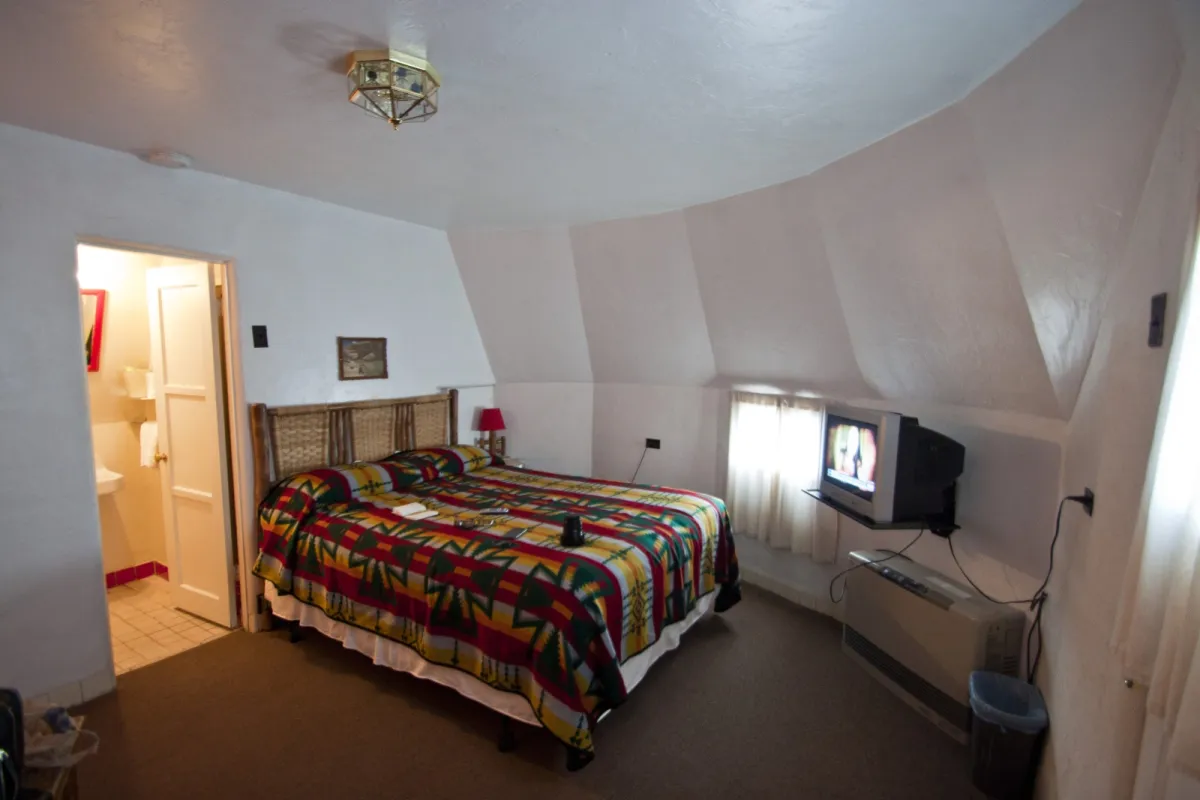 Photo: Wigwam Motel, via www.uniqhotels.com
But these survivors exist as exceptions that prove the rule: America chose efficiency over personality, predictability over adventure, and corporate consistency over family hospitality. We gained reliable accommodations and lost the possibility that tonight's stop might be the story we tell for the rest of our lives.
The mom-and-pop motor court era wasn't perfect. Some places were run-down, others overpriced, and travelers occasionally found themselves in accommodations that fell far short of their expectations. But those places also offered something that no chain hotel can replicate: the chance to be welcomed into someone's life, even if just for one night on the road.
Maybe that's what we really lost when the last motor court turned off its neon sign — not just a place to sleep, but a reminder that the best parts of traveling aren't always the destinations you planned to reach.