Built to Break: How America Went from Appliances That Lasted Decades to Gadgets Designed to Die
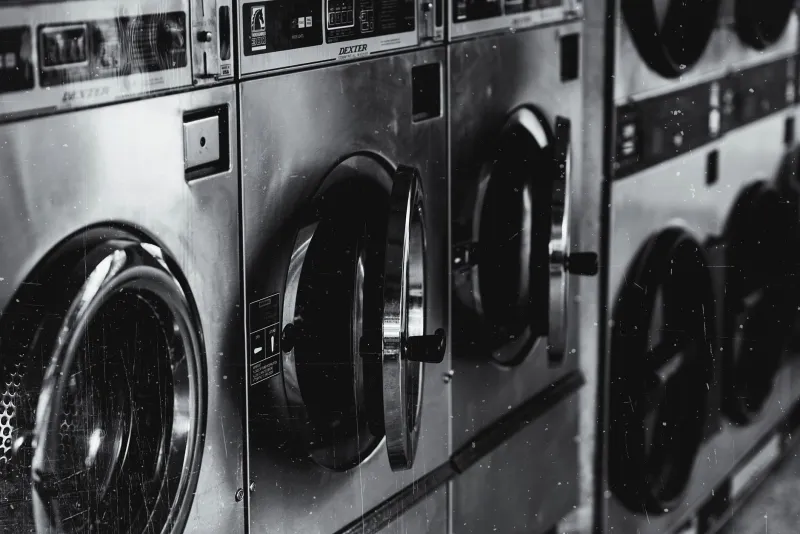
There's a good chance your grandmother still has a washer in her basement that's been running since the Carter administration. Heavy, loud, and built like a small tank — it's not pretty, but it works. Meanwhile, the sleek, digitally connected washing machine you bought three years ago just threw an error code that no one at the big-box store can explain without ordering a proprietary circuit board from overseas.
This isn't bad luck. It's by design.
When Things Were Built to Last
From the 1950s through the early 1980s, American manufacturers competed on durability. A Maytag washer from 1965 was engineered with simple mechanical timers, rubber belts, and metal components that a moderately handy homeowner could diagnose with a flashlight and a screwdriver. Parts were standardized, widely available, and cheap. Local repair shops existed in nearly every town, staffed by technicians who could fix almost anything for a fraction of the replacement cost.
The same logic applied across the board. A 1970s RCA television set could be repaired at your neighborhood TV shop for twenty or thirty dollars. Cars from that era were famously tinkerable — shade-tree mechanics rebuilt carburetors on a Sunday afternoon with tools from a Craftsman set. The prevailing philosophy among manufacturers was simple: build something good enough that people trust your brand, and they'll come back when they need a new one.
Repair wasn't a last resort. It was the normal, expected response to something breaking.
The Shift Nobody Announced
Something changed in the 1980s and accelerated through the 1990s. Globalized manufacturing drove costs down, which sounds like a win for consumers — and in the short term, it was. A new appliance got cheaper to buy. But cheaper to buy often meant cheaper to build, and cheaper to build meant shorter lifespans.
More significantly, manufacturers began discovering that a customer who repairs their appliance is a customer who isn't buying a new one. The concept of planned obsolescence — building products with intentionally limited lifespans — had been theorized since the 1930s, but it became a genuine business strategy as electronics became central to everyday products.
By the 2000s, a washing machine that once contained straightforward mechanical components was now governed by a proprietary digital control board. When that board fails — and it will — the replacement part is only available through the manufacturer, costs nearly as much as a new unit, and requires a certified technician to install. The math stops making sense almost immediately.
Consumer Reports data has shown that newer appliances, despite their higher price tags and flashier features, fail at significantly higher rates than models from thirty years ago. A study by the National Association of Home Builders found that older appliances routinely outlasted their modern counterparts by a decade or more.
The Numbers That Should Make You Angry
Here's what the shift looks like in real dollars. A washing machine repair in the 1970s, adjusted for inflation, might run you $40 to $80 in today's money. A comparable repair today — assuming parts are even available — can easily cost $300 to $500. That's before the service call fee. And because manufacturers have moved toward sealed units, proprietary connectors, and software-locked components, many repairs simply can't be done at home anymore.
Cars tell a similar story. A 1978 Ford F-150 with a carburetor problem was something millions of Americans could diagnose themselves. A modern pickup truck contains dozens of onboard computers, sensors that require dealer-level diagnostic tools to read, and components that actively resist third-party repair. The average American now spends more annually on vehicle maintenance than at any point in the past, despite — or rather because of — all that added technology.
Televisions may be the starkest example. A quality 32-inch TV in the early 1980s, inflation-adjusted, cost more upfront than today's flat screens. But it lasted 15 to 20 years with minimal intervention. The average lifespan of a modern flat-panel TV is closer to seven years, and repair is so rarely cost-effective that most Americans simply throw them away.
The Right-to-Repair Fight
A growing movement is pushing back. Right-to-repair legislation has been introduced in dozens of states, and in 2021 President Biden signed an executive order encouraging the FTC to limit manufacturers' ability to restrict independent repair. The European Union has gone further, mandating that certain appliances sold there must have spare parts available for at least ten years after purchase.
Companies like iFixit have built entire businesses around the idea that consumers deserve the ability to fix what they own. Apple, John Deere, and major appliance manufacturers have fought these efforts aggressively, arguing that complexity and safety concerns justify their restrictions. Critics call it exactly what it looks like: protecting revenue streams.
Some states, including Massachusetts and Colorado, have passed meaningful right-to-repair laws in recent years. It's a start, but the gap between what we've lost and what legislation can realistically restore is still enormous.
What We Actually Lost
Beyond the dollars, something less tangible disappeared. The neighborhood appliance repair shop — a fixture in virtually every American town through the 1980s — is nearly extinct. The skill of basic home repair, once passed from parent to child as a matter of course, has become a niche hobby rather than common knowledge. There's a reason YouTube channels teaching basic appliance repair have millions of subscribers: people are hungry for a competence they were never taught because the system stopped rewarding it.
Your grandfather fixed his washing machine because fixing it made sense. You replace yours because the alternative has been made deliberately, systematically impractical. That's not progress. That's a choice someone else made for you — and charged you handsomely for the privilege.