The Banker Who Remembered Your Father's Name: When Your Money Stayed in Your Town
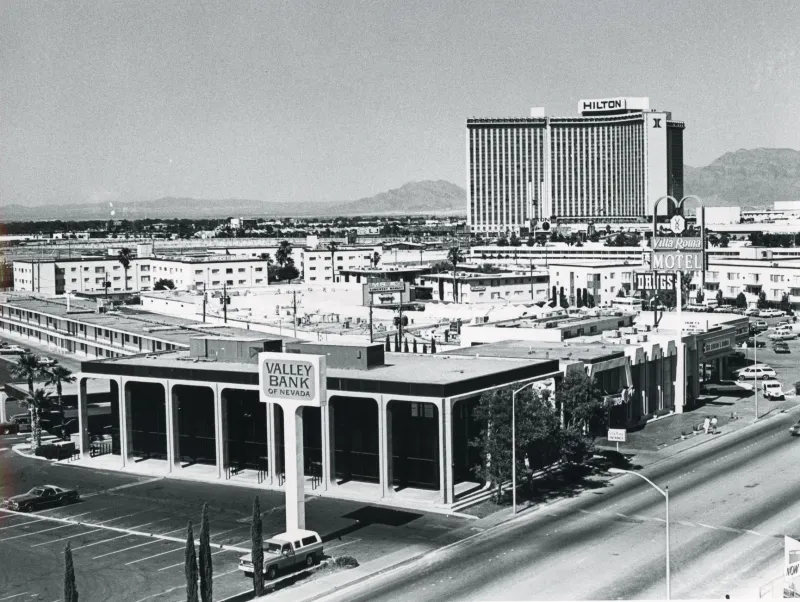
In 1978, if you wanted a home loan in a small American city, you probably walked into a building on Main Street, sat across a desk from a man or woman who had known your family for years, and had a conversation. Not a transaction — a conversation. They asked about your job, your plans, your neighborhood. They might have known your parents. They almost certainly knew your employer. And then they made a judgment call, based not just on numbers but on everything they understood about who you were and what you were likely to do.
That kind of banking is nearly gone. And its absence has reshaped small-town America more profoundly than most people realize.
What Community Banking Actually Was
At the peak of community banking in the United States — roughly from the end of World War II through the early 1980s — the country was blanketed with thousands of independent local banks and savings institutions. In 1984, the FDIC counted more than 14,000 commercial banks operating in the US. Most were rooted in specific towns, counties, or regions. Their depositors were their neighbors. Their borrowers were local business owners, farmers, young families buying first homes.
The model was simple and, in many ways, elegant. A bank accepted deposits from local residents and reinvested that money back into the same community through loans. The bank's success was directly tied to the community's health. If the town thrived, the bank thrived. If the town struggled, the bank felt it immediately. That alignment of interests created a kind of accountability that no regulatory framework has fully replicated since.
Loan officers knew their customers personally. A farmer who'd had three bad harvests in a row but had repaid every loan for twenty years could make a case for patience that a credit score simply can't capture. A young couple with modest income but deep community roots might get a mortgage that, on paper, looked marginal — because the banker understood context that a spreadsheet doesn't have room for.
The Numbers That Tell the Story
The consolidation of American banking since the 1980s is one of the most dramatic structural shifts in the country's economic history, and it happened largely without public debate.
Those 14,000 commercial banks in 1984? By 2022, that number had fallen below 4,200. The five largest banks in the United States — JPMorgan Chase, Bank of America, Wells Fargo, Citigroup, and US Bancorp — now control more than 40 percent of all banking assets in the country. In the early 1980s, the top five banks held roughly 10 percent.
The shift accelerated after the Riegle-Neal Interstate Banking and Branching Efficiency Act of 1994, which removed most restrictions on banks operating across state lines. What followed was a wave of mergers and acquisitions that swallowed independent community banks by the hundreds every year through the late 1990s and 2000s.
The 2008 financial crisis finished the job for many that had survived the merger wave. Community banks, which had largely avoided the risky mortgage-backed securities that triggered the collapse, were nonetheless crushed by the regulatory response. Dodd-Frank compliance costs that a megabank could absorb with a rounding error were existential for a bank with twelve employees and two branches.
What the Algorithm Replaced
Modern banking is, in many respects, more convenient than anything that existed in 1975. You can deposit a check by taking a photo of it. You can transfer money to another country in seconds. Your account is accessible from anywhere in the world at any hour. These are genuine improvements, and dismissing them entirely would be dishonest.
But the convenience was purchased with something real.
Today's loan decisions at large banks are primarily algorithmic. Your creditworthiness is assessed by models that consider your FICO score, debt-to-income ratio, and employment history — all of it processed without a human ever looking at your actual situation. That's fine if your situation fits the model. It's a serious problem if it doesn't.
Small business lending illustrates the gap most clearly. The Federal Reserve Bank of New York has documented consistently that small businesses in rural areas and smaller cities face significantly higher rejection rates from large banks than from community banks and credit unions. The reason isn't that large banks are malicious — it's that their systems aren't built to evaluate the kind of context-dependent risk that a local lender would understand instinctively.
A restaurant owner in a town of 8,000 people who has been operating successfully for twelve years, owns their building outright, and is a fixture of the local economy might still struggle to get a growth loan from a national bank because her revenue projections don't fit the template. A local bank officer who eats at her restaurant twice a month would have made that call differently.
The Ripple Effect on Small Towns
When the local bank closes or gets absorbed by a regional chain, the effects extend well beyond where you cash your paycheck. Local banks were historically among the most consistent donors to community organizations, little leagues, school fundraisers, and civic events. That giving came from bankers who lived in the community and felt accountable to it. National bank branches operate on philanthropic budgets set by corporate headquarters in another state, if they operate them at all.
More significantly, money deposited in a community bank stayed in the community. It funded local mortgages, local business expansion, local agriculture. Money deposited in a national bank becomes part of a global capital pool, allocated by models optimizing for return across thousands of markets simultaneously. There's no malice in that — it's just how the math works. But the result is that deposits made in rural Ohio may fund development in suburban Phoenix, while the Ohio town that generated them gets nothing.
The Credit Union Holdout
Credit unions — member-owned, not-for-profit financial cooperatives — have held the line better than most. There are still roughly 4,700 credit unions operating in the US, and surveys consistently show their members report higher satisfaction than customers of large commercial banks. They approve small business and personal loans at higher rates, charge lower fees, and by their legal structure are required to prioritize member benefit over shareholder return.
They're not a perfect substitute for what was lost. But they're the closest thing still standing to the banking relationship your grandparents had — one where the institution holding your money had a reason to care whether your town was doing okay.
The banker who remembered your father's name wasn't just a nostalgic detail. He was part of an economic infrastructure that kept money circulating locally, kept lending decisions human, and kept financial institutions answerable to the communities they served. Replacing all of that with an app and a 1-800 number was sold as progress. Whether it actually was depends on where you live — and whether your town still has a Main Street worth walking down.