A Handshake Used to Get You the Interview: How Hiring Became a Performance You Never Stop Rehearsing
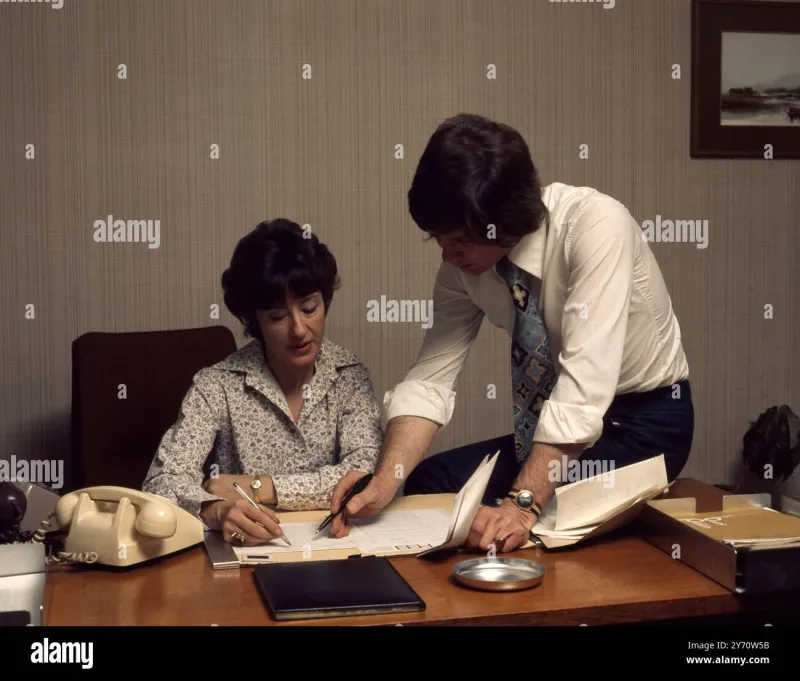
Photo: job interview handshake 1970s office hiring manager desk, via c8.alamy.com
Picture this: It's 1971. You're 22, you've just finished two years of community college, and you need a job. You put on a decent shirt, walk into the hardware distribution company on the edge of town, ask to speak to whoever does the hiring, and spend fifteen minutes talking to a guy named Harold who knew your uncle from the Rotary Club. Harold shakes your hand, tells you to be there Monday at seven, and that's it. You have a job.
No resume submitted through a portal. No LinkedIn profile optimized for keyword searchability. No personality assessment administered by software before a human ever sees your name. No digital footprint to audit. Just Harold, a handshake, and whatever he read in your eyes during that fifteen-minute conversation.
That world is not coming back. But understanding how completely it has been replaced — and what drove the replacement — is worth sitting with for a minute.
The Personal Reference Economy
For most of American economic history, hiring was a deeply personal and local process. The dominant mechanism wasn't the resume or the application — it was the reference. Who vouched for you mattered more than what you wrote about yourself, because a trusted person staking their own reputation on your reliability was a more credible signal than any document you could produce.
Small and mid-sized businesses — which employed the majority of American workers through most of the twentieth century — operated within tight community networks. Owners knew who the good workers were. Foremen knew which families produced reliable people. A recommendation from the right person opened doors; a bad reputation in the community closed them. It was an informal system, and it had real flaws — it was easier to navigate if you were white, male, and connected to the right social circles — but within its limitations, it functioned on human judgment and personal trust.
The physical walk-in application was real too. "Help Wanted" signs in windows. Classified ads in the newspaper that listed a phone number you actually called and spoke to a person. Showing up in person was expected and respected — it demonstrated initiative, and it gave the employer a chance to size you up directly. The transaction was immediate and human on both sides.
When the Resume Took Over
The resume as a formal job-seeking tool became widespread in the postwar period, particularly as corporations grew larger and hiring became more centralized. When a company employs five thousand people across multiple locations, the hiring manager can't personally know every candidate. You needed a standardized format for communicating qualifications at scale.
That standardization was a reasonable response to a real logistical problem. But it also began shifting the emphasis from "who can vouch for this person" to "what does this person say about themselves." The document replaced the relationship as the primary medium of first impression.
Through the 1970s and '80s, resume writing became a minor industry of its own. Books, workshops, career counselors. The performance of professional identity on paper was already underway — we just didn't have that language for it yet.
The Internet Raised the Stakes Dramatically
Then came the internet, and the job market transformed faster than almost any other social institution.
Job boards in the late 1990s — Monster.com, HotJobs — changed the geographic scope of hiring overnight. Suddenly a position in Cleveland could attract applications from Portland and Miami. That was good for candidate reach, but it also created a new problem: volume. A single job posting could generate hundreds or thousands of applications, and no human team could meaningfully evaluate all of them.
The solution was automation. Applicant tracking systems — software that screens resumes for keywords before a human ever reads them — became standard practice at companies of almost every size. Your resume wasn't going to Harold anymore. It was going to an algorithm that was checking whether you'd used the right terminology in the right density.
This created a strange new skill set that had nothing to do with actual job performance: the ability to reverse-engineer a job posting and mirror its language back into your resume. Tailoring your application to game the screening software. Writing for a machine first and a human second.
LinkedIn and the Always-On Professional Self
LinkedIn launched in 2003, and within a decade it had fundamentally altered what "professional identity" means. The platform turned your career into a continuous public broadcast. Every job, every title change, every skill endorsement, every article you publish or share — all of it becomes part of a permanent, searchable record that any employer can examine before you ever walk through a door.
The pressure this creates is genuinely novel in human history. Previous generations could leave jobs behind. A rough patch at one company, a year spent figuring yourself out, a lateral move that didn't pan out — these things faded from the record. Today they're potentially visible and permanent.
More than that, LinkedIn normalized the idea that you should be actively cultivating your professional brand at all times. Not just when you're job hunting, but always. Posting thought leadership content. Engaging with industry conversations. Building a network not because you like these people but because the network has instrumental value. The line between genuine professional engagement and strategic self-promotion became nearly impossible to locate.
Other platforms followed suit. Twitter became a place where careers were made and destroyed by public professional performances. Personal websites, portfolios, GitHub profiles, Substack newsletters — the modern job seeker is expected to maintain a multi-platform presence that collectively argues for their value.
What Got Lost in the Optimization
The old system was far from perfect. The handshake economy excluded people who didn't have the right connections, which in practice often meant excluding people who weren't white, weren't male, or weren't embedded in the dominant social networks of their community. The formalization of hiring — the resume, the structured interview, eventually diversity hiring initiatives and legal protections — addressed real injustices.
But formalization and digitization brought their own distortions. Algorithmic screening filters out candidates based on keyword patterns that may have nothing to do with actual capability. The emphasis on curated online presence advantages people who are comfortable performing themselves publicly — extroverts, people with leisure time to maintain profiles, people who grew up digitally fluent — over people who are quietly excellent at work but poor at self-promotion.
And there's something more diffuse but real: the relentlessness of it. The job search used to be a discrete activity you engaged in when you needed work. Now, for many professionals, personal branding is a permanent background task. You're always, in some sense, interviewing. That's a different psychological relationship with work — and with yourself.
Harold Isn't Coming Back, But Neither Is the Worst of the Old System
The honest accounting here is mixed. Broader geographic reach, reduced (though not eliminated) reliance on insider networks, and more standardized evaluation criteria are genuine improvements. The old handshake economy had a dark side that shouldn't be romanticized.
But somewhere in the migration from personal trust to algorithmic screening to perpetual personal branding, something got lost. The idea that your work should speak for itself. That a good reputation in your community was enough. That you didn't have to perform your career identity around the clock just to stay employable.
Harold read people well enough to build a company. The algorithm reads keywords. Those aren't the same thing, and pretending they are has costs we're still adding up.