Dear Someone: The Lost Art of Writing a Letter That Actually Meant Something
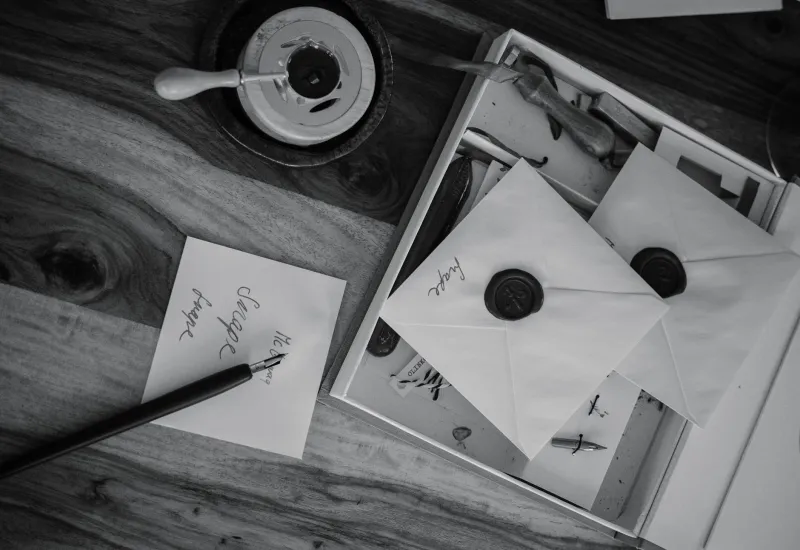
Somewhere in a shoebox in your parents' attic, or tucked inside a book on a shelf nobody touches anymore, there's probably a letter. Maybe it's from a grandparent, a college friend, or someone you loved a long time ago. The handwriting is unmistakable. The paper has that slightly soft quality that decades give to things. And if you read it — really read it — there's a weight to it that no text thread has ever quite matched.
That weight had a reason.
The Ritual of Reaching Out
Before email, before texts, before social media turned communication into a scroll you barely glance at, staying in touch with someone who lived far away required real effort. You had to sit down. You had to think. You had to find the right words, write them out by hand, fold the paper, address an envelope, find a stamp, and get to a mailbox. The whole process could take an hour. Sometimes more.
And then you waited. Two days, maybe three, for a letter traveling within the same region. A week or more for something crossing the country. If you were corresponding with someone overseas, you might wait three weeks before knowing whether your words had arrived safely.
That waiting was not a flaw in the system. It was, in a very real way, the system working as intended.
The delay forced a kind of intentionality that instant communication has quietly eliminated. When you knew your letter wouldn't arrive for days, you didn't dash off a half-thought. You composed. You considered what the other person actually needed to hear. You told stories with beginnings and ends. You asked questions you genuinely wanted answered. The letter was an artifact of a relationship, not just a data transfer.
What Receiving Mail Used to Feel Like
Ask anyone who grew up before the mid-1990s and they'll tell you the same thing: checking the mailbox was an event. There was genuine anticipation in flipping through the envelopes, and genuine joy — a small but real kind — when something arrived with your name on it in someone's handwriting.
Psychologists have a term for this now. The "endowment effect" of physical objects means we assign more emotional value to things we can hold. A handwritten letter carried the literal trace of another person — the pressure of their pen, the particular slant of their letters, maybe a smudge where they rested their hand. It was physical evidence that someone had been thinking about you, specifically, for a sustained period of time.
Compare that to the modern experience of receiving a text. The average American sends and receives over 70 text messages a day. The average response time to a text is 90 seconds. There is no waiting, no anticipation, and — if we're honest — often very little thought behind the message itself. "lol ok" has never made anyone feel deeply known.
The Attention Span Casualty
The shift from letters to digital communication didn't just change how we talk to each other. Research increasingly suggests it changed how we think. A 2019 study published in the journal Computers in Human Behavior found that frequent digital communication was associated with reduced capacity for deep reading and sustained concentration. Writing a letter, by contrast, activates planning and organizational thinking in ways that firing off a text simply doesn't.
There's also the matter of emotional regulation. When you couldn't respond to bad news in real time, you had to sit with your feelings long enough to articulate them thoughtfully. Grief, anger, love, disappointment — a letter forced you to process emotion rather than react to it. The discipline of that delay had psychological benefits we only started appreciating after we'd already given it up.
Mental health professionals have noted a correlation between the decline of letter-writing and the rise of communication-related anxiety. When everything is instant and expected to be instant, the pressure to respond — and to respond well, and to respond now — never fully lifts.
What Didn't Disappear
Here's the part that surprises most people: letter-writing never fully died. It just went underground.
The pen pal movement, which flourished among American schoolchildren through the 1970s and 80s, has seen a genuine revival in the last decade. Organizations like Global Pen Friends and the International Pen Friends club report growing membership, particularly among adults aged 25 to 45 who describe themselves as "burned out on digital communication." Journaling communities, stationery shops, and even dedicated letter-writing subscription boxes have found robust markets.
During the COVID-19 pandemic, the USPS reported a notable uptick in personal mail — cards, letters, handwritten notes — as people reached for slower, more deliberate ways to say I'm thinking about you during a period of profound disconnection.
There's something instructive in that instinct.
The Trade-Off We Made
Nobody is seriously arguing that we should go back to waiting two weeks to find out if a friend is doing okay. The speed of modern communication has genuine value — in emergencies, in logistics, in keeping relationships alive across distances that once made them nearly impossible to maintain.
But speed came with a cost that we didn't fully negotiate. We traded depth for volume, intentionality for immediacy, and the particular intimacy of a handwritten page for the disposable convenience of a message that vanishes into a thread of hundreds.
The shoebox in the attic doesn't lie. Those letters lasted because they were made to last — written by people who understood, without being told, that some things were worth the time it took to say them properly.