America's Lost Art of Watching Sports: When the Radio Was Theater and the Scoreboard Was the Star

When Sports Happened in Your Mind
Picture this: It's October 1921, and the New York Giants are playing the Yankees in the World Series. But instead of settling into your couch with a beer and 47 camera angles, you're standing shoulder-to-shoulder with 200 strangers outside the offices of the Chicago Tribune, watching a man in suspenders move wooden markers across a massive board painted to look like a baseball diamond.
 Photo: Chicago Tribune, via www.architecture.org
Every pitch arrives by telegraph. Every swing gets announced by a man with a megaphone. Every runner's movement gets tracked with wooden pegs that inch around painted bases while the crowd holds its breath.
This was how America watched sports for the better part of 50 years — and it was absolutely electric.
The Theater of the Invisible Game
Before television turned sports into a visual medium, following your team required serious imagination. Radio broadcasts started in the 1920s, but even then, most games weren't covered. Instead, Americans flocked to what they called "electric scoreboards" — elaborate displays that recreated games in real time using information transmitted by telegraph.
The best of these boards were works of art. Hotels like the Palmer House in Chicago installed boards that covered entire walls, complete with painted stadiums, moving lights for base runners, and mechanical devices that showed ball and strike counts. Operators dressed like umpires would call out plays while moving pieces across the board like a giant board game.
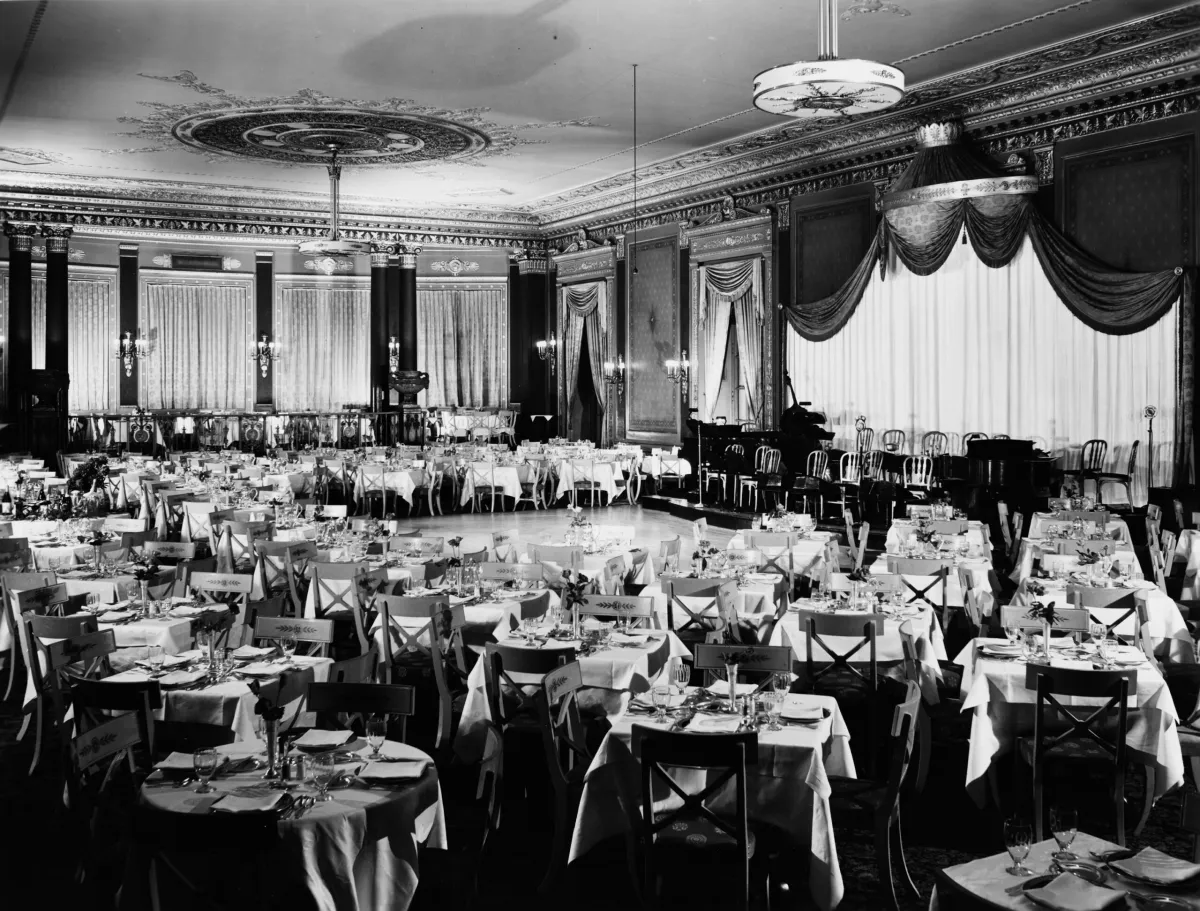 Photo: Palmer House, via www.chicagohistory.org
Thousands of people would pack these viewing parties. They'd cheer mechanical runners rounding painted bases. They'd groan when a wooden batter figure got moved to represent a strikeout. The drama was real, even if the action was entirely secondhand.
When Listening Was an Event
Even radio broadcasts were communal affairs. Families didn't own multiple radios — they owned one, and it lived in the living room like a piece of furniture. When the World Series came on, neighbors invited themselves over. Kids sat on the floor. Adults argued about what they thought they heard.
The legendary broadcaster Red Barber once described recreating away games from telegraph reports in his studio, using sound effects and his imagination to paint pictures that listeners swore they could see. He'd tap a wooden block to simulate the crack of the bat, rustle papers for crowd noise, and describe action that was happening 500 miles away based on cryptic telegraph codes like "S1C" (strike one called) or "B2L" (ball two, low).
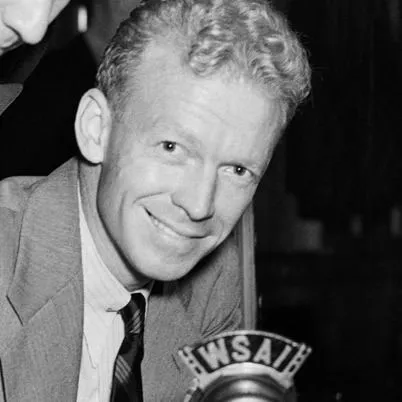 Photo: Red Barber, via alchetron.com
Listeners knew this was theater, but they didn't care. The game lived in their minds, which made every moment feel personal and immediate in a way that multiple camera angles somehow never quite match.
The Death of Sports Imagination
Television didn't just change how we watch sports — it fundamentally altered what sports fandom means. The first televised World Series in 1947 drew massive audiences to bars and appliance stores, but something irreplaceable was lost in translation.
When you could see everything, you stopped imagining anything. When cameras showed you exactly what happened, the communal act of piecing together the story disappeared. When games moved from public spaces into private homes, sports became something you consumed rather than something you experienced with your community.
Modern sports viewing is undeniably superior in terms of information and access. We see every angle, know every statistic, and can watch any game from anywhere. But we've lost the peculiar intimacy of not quite knowing what was happening and having to trust someone else to tell us the story.
What We Gave Up for What We Gained
Today's sports fans have access to more games, more information, and more analysis than any generation in history. We can watch highlights on our phones, debate calls with slow-motion replay, and follow our teams through social media updates that arrive faster than the players can get back to the huddle.
But something profound was lost when we traded imagination for information. Those crowds gathered around scoreboards weren't just watching a game — they were participating in a collective act of storytelling. Every telegraph update was a plot twist. Every wooden runner moving around painted bases was a shared moment of suspense.
The modern sports experience is more convenient, more comprehensive, and more comfortable. But it's also more solitary, more passive, and somehow smaller despite being broadcast to millions.
Those Americans standing in hotel lobbies, straining to hear updates crackling through speakers, weren't just following their teams. They were proving that the best sports stories happen in the spaces between what you know and what you hope — and that sometimes, not seeing everything makes you feel everything more deeply.
The scoreboards are gone now, replaced by screens that show us more than we could ever want to know. But every time your team is down by one in the bottom of the ninth, and your heart is pounding even though you can see exactly what's happening, you're feeling an echo of what it was like when America watched sports with its eyes closed and its imagination wide open.