College Basketball Used to Belong to Your Town — Then TV Bought It and Never Gave It Back
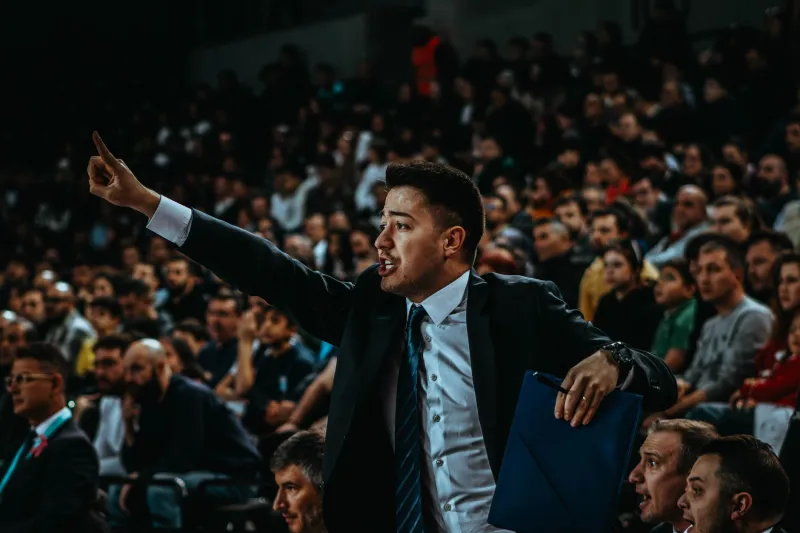
In the winter of 1954, if you lived in Lexington, Kentucky, or Durham, North Carolina, or Terre Haute, Indiana, college basketball wasn't something you watched from a distance. It was something that happened to you. You knew the players' names because you'd seen them at the diner. You knew the coach because he'd spoken at your church. You had an opinion about the starting lineup that was based on actual observation, not a highlight reel, because you'd been in that gym every home game since October.
 Photo: Lexington, Kentucky, via kybourbontrail.com
The sport was yours. Not the NCAA's. Not CBS's. Yours.
That version of college basketball still technically exists. But it's getting harder to find underneath everything that's been built on top of it.
The Game Before the Cameras Arrived
For most of the first half of the 20th century, college basketball was radically regional. Programs recruited locally — not because they were noble about it, but because long-distance recruiting was expensive, travel was difficult, and there was no national exposure to make a kid in California aware that a school in Ohio even had a basketball team.
The result was a sport deeply embedded in its geography. Kentucky's teams were Kentuckians. Indiana's teams were Hoosiers in the literal sense. The players came from the same towns as the fans, attended the same churches, and in many cases had been watched by those fans since they were in high school. The relationship between a program and its community wasn't a marketing strategy. It was just reality.
Coaches reflected this too. Adolph Rupp coached Kentucky for 42 years. Phog Allen coached Kansas for 39. These weren't just long tenures — they were lives given to a place. The coach was as much a civic institution as the mayor, and in some towns considerably more beloved. When a coach left, it was news that hit the community like a death in the family, because in a real sense, that's what it was.
Arenas were small, loud, and suffocating for visiting teams in ways that modern venues — however large — rarely replicate. Fans sat close enough to hear the coaches curse. Students stood for entire games. The atmosphere wasn't manufactured by a DJ and a light show. It came from people who were genuinely, personally invested in the outcome.
The Tournament That Changed Everything
The NCAA Tournament existed long before it became the cultural phenomenon it is today. It started in 1939 with eight teams, was largely overshadowed by the NIT for years, and spent most of its early decades as a regional afterthought. The event that now generates over a billion dollars in television revenue and turns office workers into amateur statisticians for three weeks every March was, for a long time, a modest postseason event that most of the country ignored.
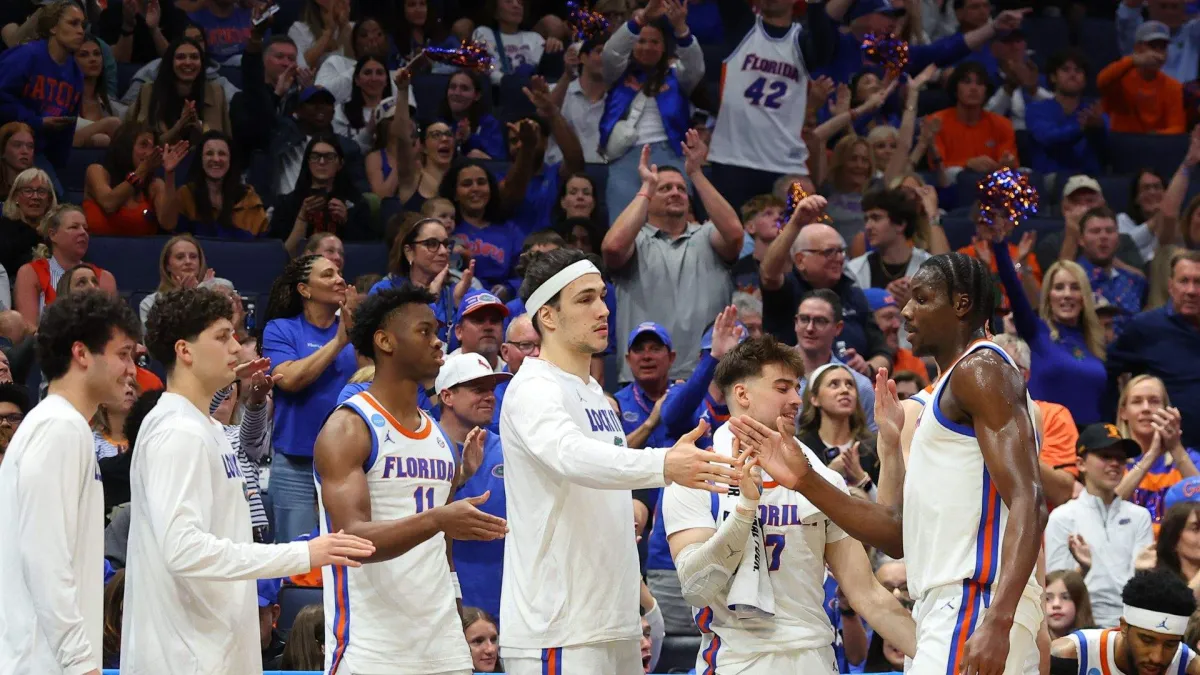 Photo: NCAA Tournament, via heavy.com
Television changed that, but not all at once. The growth was gradual — more teams added to the bracket, more games broadcast, more money flowing in from rights deals that kept expanding. By the 1980s, the tournament had found its cultural footing. By the 1990s, it was a national institution. By the 2010s, it was an industry.
The bracket — that deceptively simple single-elimination grid — turned out to be one of the most brilliant pieces of sports marketing ever created, largely by accident. It gave people with no connection to any program a reason to care. It democratized fandom in a way that actually undermined local fandom, because once you'd filled out a bracket that had you rooting for a 12-seed from a school you'd never heard of, your relationship to the sport became national and abstract rather than local and personal.
When the Players Became Products
The transformation of college basketball from community sport to national entertainment product changed the athletes' relationship to their schools in ways that are only now becoming fully visible.
For most of the sport's history, a player who committed to a program stayed. Transfers happened, but they were unusual enough to carry a stigma. A player who left was, in the eyes of the fan base, a defector. The four-year commitment wasn't just a rule — it was a social contract between the player, the program, and the community that supported it.
Today's transfer portal has effectively dissolved that contract. Players now move between programs with a frequency that would have been unthinkable in 1975, and the rules that once restricted them have been largely dismantled. The one-time transfer exception became the norm. NIL deals — the ability for players to earn money from their name, image, and likeness — turned recruiting into something closer to free agency, with boosters operating as de facto general managers.
None of this happened in a vacuum. Players moving more freely is, in many ways, a correction to a system that exploited them for decades while generating enormous revenue for everyone around them. The moral case for player compensation is genuinely strong.
But something was lost in the exchange. The player who grew up in the state, stayed four years, and became a legend that the community carried in its memory for generations — that figure is increasingly rare. The connection between a roster and a place has loosened in ways that make the local investment harder to sustain.
The Town Still Shows Up. The Sport Barely Notices.
Here's what's strange about all of it: the fans largely held on even as the sport moved away from them. Arenas still fill. Local television ratings for college basketball remain strong in markets with storied programs. The emotional investment hasn't disappeared.
But the economics of the sport increasingly flow away from those communities rather than through them. Television contracts are negotiated at the conference level. Bowl games — the college football equivalent — and tournament revenue gets distributed through mechanisms that favor the largest programs and the most powerful conferences. The small regional school that once anchored a community's winter identity now struggles to compete for recruits, media attention, or tournament bids against programs that operate on an entirely different financial scale.
Conference realignment has made the geography almost surreal. Programs that built their identities on regional rivalries — games that meant something because of shared history and physical proximity — are now playing in conferences that span three time zones. The Big Ten has a school in New Jersey. The ACC stretches to California. The map that once gave college basketball its regional soul has been redrawn entirely around television market size and revenue potential.
What the Game Was, and What It Became
The college basketball of 1955 and the college basketball of 2025 share a court, a ball, and a set of rules. Beyond that, they are almost entirely different enterprises.
One was a community sport that happened to be played at universities. The other is a national entertainment product that happens to involve college students. Both have produced extraordinary basketball. Only one of them gave a town something it could genuinely call its own.
The fans in Lexington still pack Rupp Arena. The Cameron Crazies still stand the whole game. The rituals persist, and the passion is real. But somewhere between the first television contract and the latest transfer portal update, the sport quietly changed what it owed those people.
The answer, increasingly, is not very much.