The Empty Lot That Built Better Athletes Than Any Travel Team Ever Will
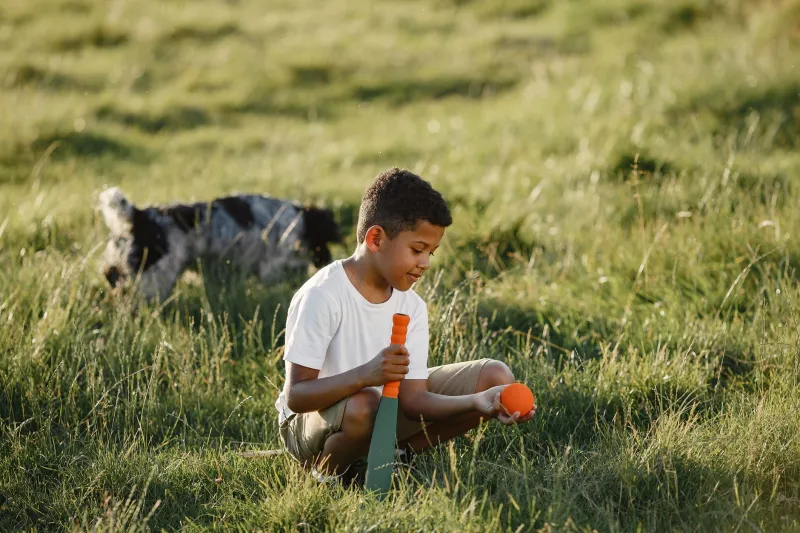
It didn't have dugouts. It didn't have bases — it had a torn-up sneaker and two rocks and whatever someone's older brother had left behind. The outfield fence was a chain-link barrier that separated the lot from Mrs. Kowalski's backyard, and if you hit one over it, you either climbed the fence or lost the ball. The mound was a patch of dirt that somebody had scraped flat with their foot. The whole thing was maybe sixty feet from foul line to foul line.
 Photo: Mrs. Kowalski, via today.nayag.com
And it was, by nearly every measure that matters, the best sports facility most of those kids ever used.
What Vacant Lots Actually Were
For most of the 20th century, American cities and towns had gaps in them. Lots where buildings had burned down or never gone up. Fields at the edge of new subdivisions where the developer had run out of money. Stretches of open ground behind factories, beside railroad tracks, between apartment buildings — spaces that existed in the in-between of adult planning and weren't claimed by anyone who cared.
Kids claimed them.
Without permission, without supervision, and without a single waiver form, children turned these spaces into baseball diamonds, football fields, basketball courts, and hybrid games that had names only the neighborhood understood. They dragged lumber to make backstops. They wore paths into the grass that functioned as baselines. They argued about the rules, revised the rules, enforced the rules, and occasionally threw punches over the rules — then came back the next afternoon and did it all again.
This was not organized youth sports. This was something older and, in many ways, more valuable.
The Skills Nobody Scheduled
Here's what happened on a sandlot that doesn't happen at a coached practice: kids solved problems in real time with no adult to defer to. When there were only seven players, someone invented a rule about phantom fielders in right field. When the ball got waterlogged in a puddle, someone decided it was still in play and everyone argued until a consensus emerged. When the big kid kept hitting it over the fence and ruining the game, the group figured out a way to handicap him — or they told him to pitch instead.
These weren't trivial moments. They were exercises in negotiation, conflict resolution, and creative adaptation that no curriculum has ever managed to replicate. The sandlot was, without anyone intending it to be, a masterclass in self-governance.
Athletically, the benefits were just as real. Kids playing without coaches played more. They played all afternoon. They played in bad conditions. They played positions they weren't supposed to play. The shortstop pitched. The catcher played outfield. The kid who was terrible got his swings anyway because there wasn't a coach rotating him to the bench. Repetition happened naturally, driven by desire rather than drill sheets.
Sports scientists now have a term for the kind of unstructured movement that sandlot play produced: deliberate play. Research consistently shows it develops broader athletic foundations than early specialization. The kids on those lots were doing it by accident, every single day, for free.
What Happened to the Lots
The disappearance of open space in American communities wasn't a single event. It was a slow accumulation of forces that each made perfect sense on its own.
Property values rose. Vacant land that sat dormant in 1962 was worth developing by 1985. Liability law evolved, and landowners who once ignored kids playing on their property began worrying about lawsuits if someone broke an arm. Cities grew denser. Suburbs spread outward in patterns that prioritized roads and houses over empty spaces. Insurance, zoning, and development pressure combined to eliminate the gaps that kids had quietly colonized for generations.
At roughly the same time, organized youth sports expanded to fill the void. Little League had existed since the 1930s but exploded in the postwar years. Youth soccer leagues spread across the suburbs in the 1970s and 1980s. By the 1990s, travel teams and club sports had turned youth athletics into a structured, scheduled, adult-managed enterprise that left little room for the unplanned kind.
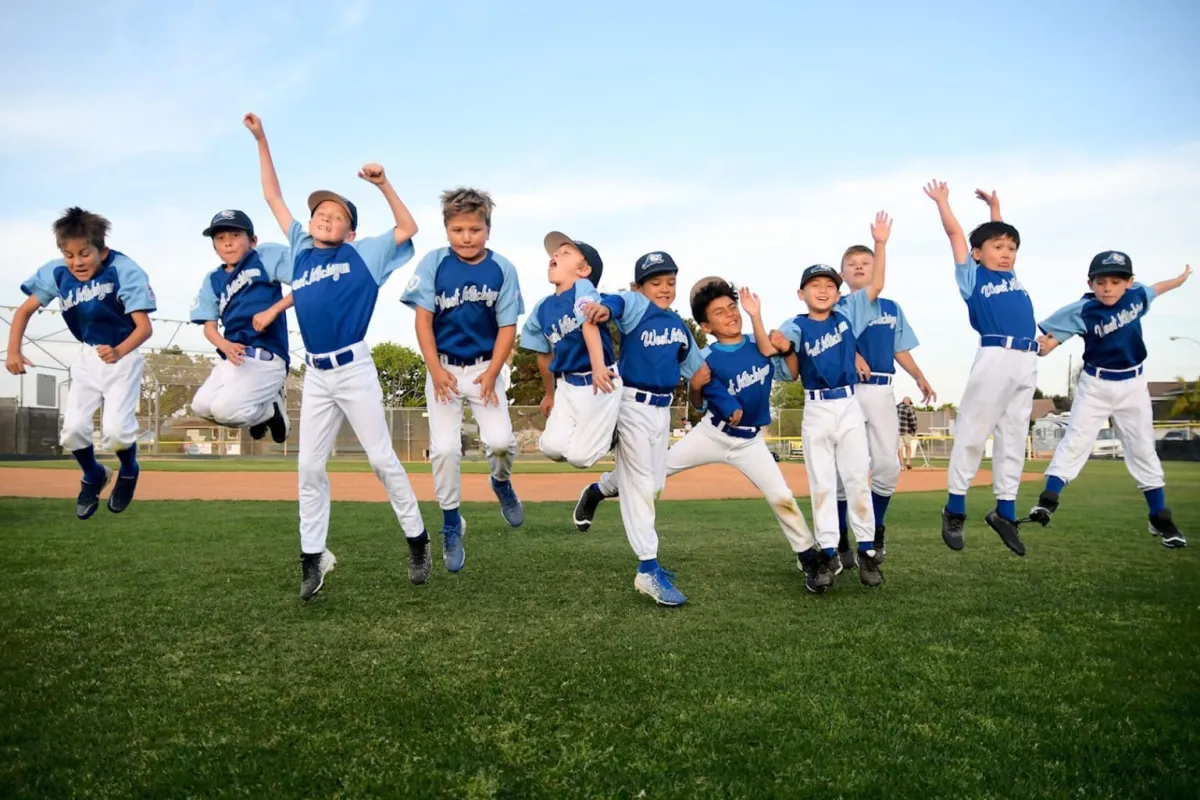 Photo: Little League, via res.cloudinary.com
The open space didn't just disappear. It was replaced — with something that looked like an improvement.
The Billion-Dollar Substitute
America now spends an estimated $30 billion a year on youth sports. Families shell out thousands of dollars per season on travel teams, elite training facilities, personal coaches, and tournament entry fees. Artificial turf fields with proper drainage, LED lighting, and digital scoreboards have replaced the patchy grass and the sneaker-for-a-base.
In terms of infrastructure, it's not even close. Today's youth athlete has access to facilities that would have seemed science-fictional to the kid playing on a vacant lot in 1957.
And yet. Burnout rates among youth athletes are climbing. Early specialization is linked to higher injury rates and shorter athletic careers. Kids are dropping out of organized sports in greater numbers by the time they hit high school. The joy — the self-directed, intrinsically motivated joy that kept a kid playing until his mother called him in for dinner — is increasingly hard to find in a system optimized for performance metrics and college recruitment.
The sandlot didn't produce worse athletes. In many cases, it produced better ones. What it definitely produced was kids who loved the game itself, rather than the apparatus around it.
The Lot Nobody Can Build Back
You can't manufacture a sandlot. The moment you designate a space for unstructured play and install supervision and safety surfacing and age-appropriate equipment guidelines, it becomes something else entirely. The value of those vacant lots was precisely that nobody was in charge of them. The kids were in charge. That's the part that can't be reproduced with a budget and a facilities committee.
Some cities have tried. Adventure playgrounds, where kids are given tools and raw materials and minimal oversight, have shown promising results in Europe and in a handful of American cities. The research on free play is unambiguous: children who have more of it develop better, in almost every dimension that matters.
But the lots are gone. The fields are subdivisions. The weedy stretch behind the factory is a parking structure now.
What replaced them is impressive. It just isn't the same thing. And the kids who grew up on those lots — who argued about the rules and wore paths in the grass and climbed Mrs. Kowalski's fence — knew the difference, even if they didn't have the language to explain it.