The Coach's Word Used to Be the Contract: How College Recruiting Stopped Being About Trust and Started Being About Business
The Coach's Word Used to Be the Contract: How College Recruiting Stopped Being About Trust and Started Being About Business
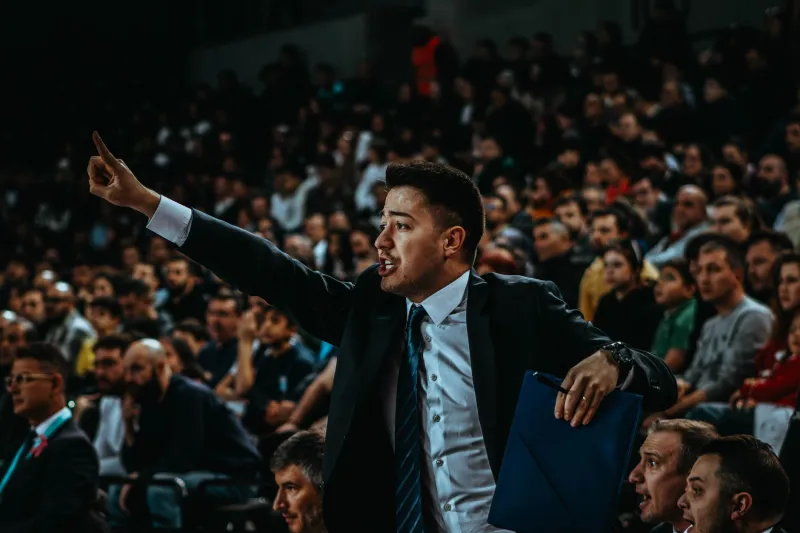
Somewhere in middle America, sometime in the late 1960s, a college football coach drove three hours to sit in a family's living room. He drank whatever coffee was offered, talked to the parents like neighbors, and made a promise: come play for us, and we'll take care of your son. No paperwork. No multimedia presentation. No entourage. The family talked it over after he left, and that was more or less that.
The scholarship letter arrived later. But the decision had already been made at the kitchen table, on the strength of whether the coach seemed like a man who kept his word.
That process — informal, personal, built entirely on human judgment — governed college athletic recruiting for most of the twentieth century. It had real flaws. It was also something that the current system, for all its sophistication and regulation, has almost entirely failed to replace.
When a Handshake Was Binding
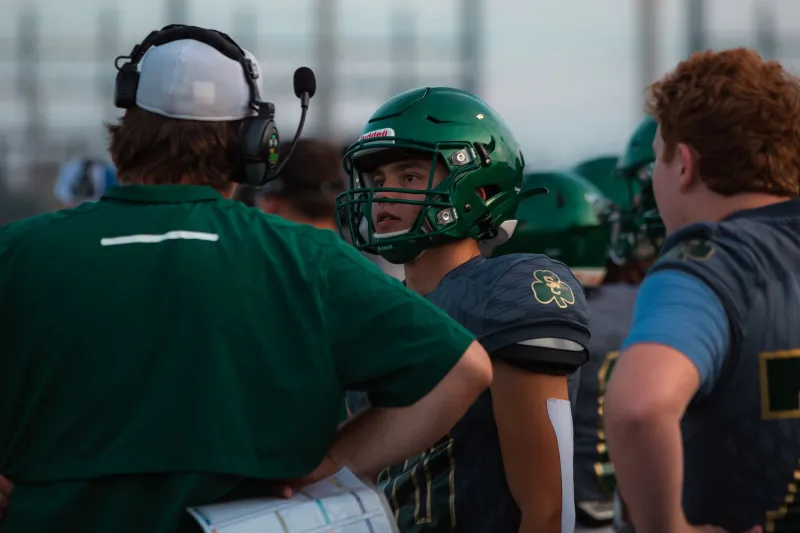
Before the NCAA built its current scaffolding of contact periods, dead periods, official visit limits, and compliance protocols, recruiting was largely unregulated and surprisingly straightforward. Coaches identified prospects through high school networks, word of mouth, and their own scouting. Contact happened when it happened. Offers were verbal, personal, and — in the culture of the era — treated as sacred.
A coach who broke his word to a recruit didn't just lose a player. He lost his reputation in the community that fed him talent. The informal social enforcement was real and effective. Families talked. High school coaches compared notes. A program that burned a kid's trust found the pipeline from that region drying up quietly over the following years.
The athlete, for his part, committed to a school and largely stayed. Transferring carried stigma and practical penalties — the NCAA's transfer rules were restrictive enough that most players who moved programs sat out a year of eligibility. Loyalty wasn't just a value; it was structurally enforced.
None of this made the old system perfect. Recruiting violations happened. Promises were broken. Minority athletes in particular were sometimes treated as commodities rather than people. But the basic texture of the relationship — a young person's future decided by human trust rather than legal architecture — was real.
The Bureaucratization of a Relationship
Change came in layers. The NCAA gradually formalized recruiting rules through the 1980s and '90s, responding to scandals and competitive imbalances with ever-more-detailed regulations. Contact periods were codified. Official visit numbers were capped. Academic eligibility standards were standardized through Proposition 48 in 1986, adding another institutional layer between coaches and recruits.
Each rule was defensible in isolation. Collectively, they transformed recruiting from a personal process into a compliance exercise. Coaches hired recruiting coordinators. Programs built databases. The informal relationship between a coach and a family — the thing that had actually driven decisions for decades — became one input among many in an increasingly industrialized system.
Social media finished the transformation that regulation started. By the mid-2010s, a high school sophomore could build a national recruiting profile through Twitter, Instagram, and specialized platforms like Hudl, where highlight reels circulated to every major program in the country simultaneously. The local knowledge and personal connection that had given individual coaches advantages evaporated. Recruiting became national, visible, and relentlessly comparative.
NIL Changed the Vocabulary Entirely
The Supreme Court's 2021 ruling in NCAA v. Alston, followed quickly by the NCAA's own policy reversal on name, image, and likeness compensation, didn't just change what athletes could earn. It changed what recruiting fundamentally was.
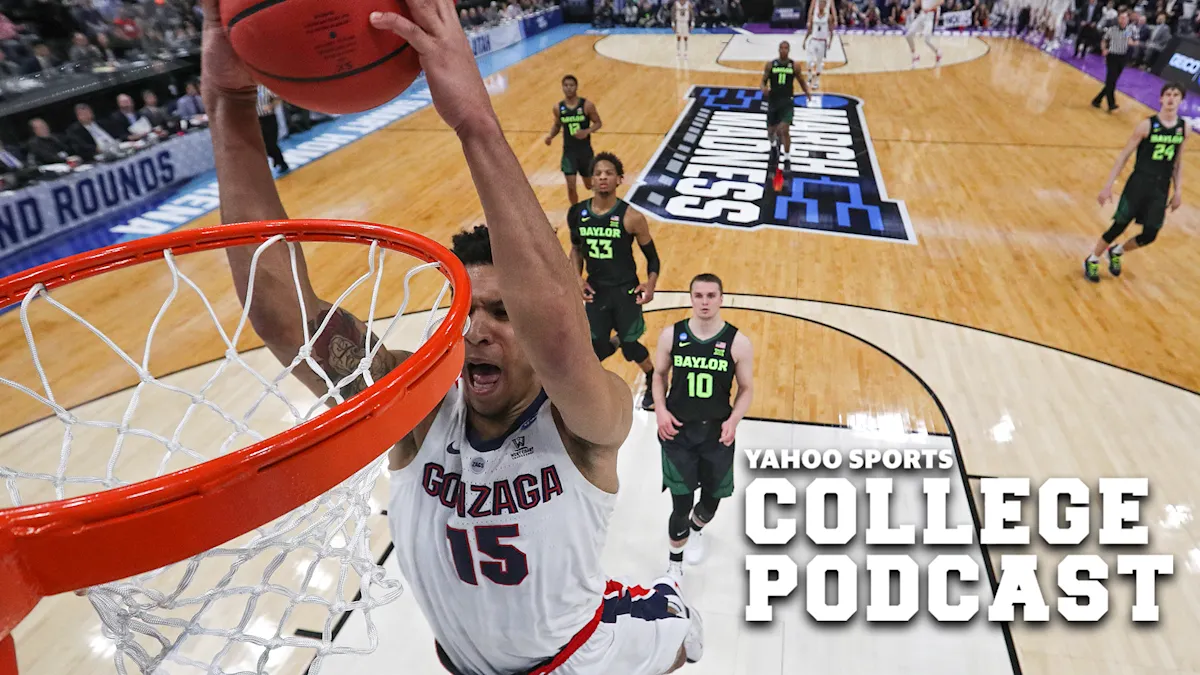 Photo: NCAA v. Alston, via s.yimg.com
 Photo: Supreme Court, via katiecouric.com
Before NIL, a scholarship negotiation was about education, development, playing time, and program culture. After NIL, it also involves projected earning potential, brand partnership opportunities, and collective agreements — pools of money assembled by booster groups called collectives, designed specifically to pay athletes at a given school.
High school athletes with significant recruiting profiles now routinely work with agents or NIL advisors before they graduate. Some hire attorneys to review scholarship offers. The family sitting at the kitchen table with a coach in 2024 may have a representative in the room whose job is to negotiate, not just listen.
This isn't inherently wrong. Athletes — particularly Black athletes who built enormous revenue for programs that paid them nothing for generations — have legitimate claims to compensation. The equity arguments for NIL are real and serious. But the shift from trust-based relationship to negotiated transaction changed the nature of the experience for everyone involved, including the coaches.
The Transfer Portal and the Death of Commitment
If NIL changed what recruiting meant, the transfer portal changed what commitment meant. Since the NCAA opened unrestricted one-time transfers in 2021 — and then effectively removed most transfer restrictions entirely — the movement of athletes between programs has exploded. Hundreds of football players enter the portal every December and January. Basketball rosters turn over dramatically year to year.
Coaches who built recruiting classes over years now find those classes raided by competitors the moment a player's situation changes. Athletes who once would have worked through adversity at a single program now have a legitimate, accessible alternative. The result is a market — fluid, dynamic, and responsive to individual incentives — where the old concept of a four-year commitment to a program feels almost quaint.
Did It Actually Get Better?
The honest answer is: for some people, clearly yes. Athletes have real leverage now that they never had before. The power imbalance that let coaches make and break promises without accountability has shifted. A kid from a poor family can now potentially earn meaningful money from the talent that was always being monetized around him.
But something got lost too, and it's worth naming plainly. The version of recruiting that happened in living rooms and over kitchen tables — flawed and uneven as it was — produced relationships that sometimes lasted lifetimes. Players ran through walls for coaches who had looked their parents in the eye and made a human promise. That texture is genuinely harder to find in a system where every decision flows through agents, collectives, and compliance portals.
The coach's word used to be the whole contract. It was imperfect currency. But it was currency that meant something to the people exchanging it — and that particular transaction is one that no amount of legal infrastructure has quite managed to replicate.