When Every Kid on the Block Had the Same Pool: The Summer America Stopped Sharing the Water
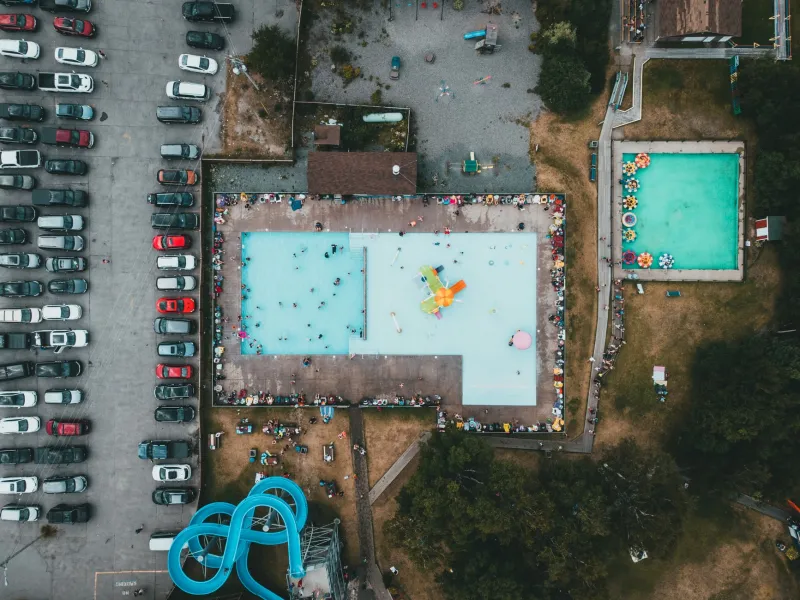
Sometime around mid-June, every kid in the neighborhood knew the drill. Find your suit. Grab a towel — didn't matter if it was threadbare. Dig a quarter out of the kitchen junk drawer. Walk to the pool. That was it. That was the plan, and it was the same plan whether your dad drove a Cadillac or fixed transmissions for a living.
The municipal pool didn't care about any of that. It just cared that you paid your quarter and didn't run on the deck.
For a few decades in the middle of the last century, that simple transaction was one of the most democratic rituals in American life. And it's largely gone now — replaced by something that looks similar on the surface but carries a very different set of unspoken rules about who belongs.
The Golden Age of the Community Pool
The great era of American public swimming infrastructure was roughly 1930 to 1970. The New Deal built hundreds of public pools across the country during the Depression, part of a broader investment in public recreation that reflected a genuine belief that leisure was a civic good, not a luxury. Cities and towns maintained those pools for decades, charging nominal admission fees — often a dime or a quarter — that were designed to cover basic operating costs, not turn a profit.
 Photo: New Deal, via english.cdn.zeenews.com
At their peak, these facilities were genuinely communal spaces. Big pools in urban parks could hold hundreds of swimmers at once. Smaller neighborhood pools were more intimate but served the same function: a place where kids from different streets, different schools, and different economic backgrounds spent their summers doing exactly the same thing. Swimming badly, eating hot dogs from the snack bar, and arguing about who got to the diving board first.
Lifeguards were often local teenagers earning their first paycheck. The concession stand sold things that cost a dime. You went every day, you knew the regulars, and by the end of August you'd made friends with kids you'd never have met any other way.
What Killed the Public Pool
The decline happened in layers. First came desegregation. Many public pools in the South — and more than a few in the North — had been explicitly segregated for decades. When courts ordered them integrated in the 1950s and 1960s, a significant number of municipalities responded not by integrating their pools but by closing them. Private swim clubs, which could legally restrict membership, proliferated as a workaround. The public pool became a casualty of the very equality it should have represented.
Then came the suburban exodus. As white middle-class families moved to the suburbs in the postwar decades, city tax bases eroded. Municipal recreation budgets got squeezed. Pools that had been maintained since the New Deal started showing their age, and aging infrastructure is expensive to fix when you're already running a deficit. Deferred maintenance piled up. Pools closed.
And then came the backyard pool. By the 1970s, in-ground residential pools had become attainable for upper-middle-class families. By the 1980s and 1990s, above-ground pools were accessible to a broader swath of the middle class. The logic was understandable — why drive to a crowded public facility when you could have your own? But every family that made that choice was also quietly withdrawing from a shared resource, taking their kids out of the mix, and reducing the political constituency that might have pushed to keep public pools funded.
The HOA Pool and the Waitlist That Tells You Everything
In newer suburban developments, the community pool didn't disappear — it just changed ownership and character. HOA-managed aquatic centers replaced municipal facilities in many growing suburbs. They look similar from the outside: a pool, some lounge chairs, a bathhouse. But the economics and the culture are fundamentally different.
HOA pools are funded by association dues, which means they serve only the residents of that development. Membership is automatic if you live there and impossible if you don't. In older, more established swim clubs — the kind that have been around since the 1950s — membership waitlists can stretch for years. Some clubs in affluent suburbs have waiting lists measured in decades. You can't buy your way in even if you have the money; you have to know someone, or wait long enough, or both.
The private backyard pool is even more exclusionary by design. It sits behind a fence. It serves one family. The kid from two streets over — the one who would have been your best friend if you'd both shown up at the municipal pool on the same June morning — never gets invited over, because nobody thinks to invite someone they've never met.
What a Quarter Used to Buy
The numbers tell a stark story. In 1970, roughly 2,000 public pools operated across the United States under municipal management, accessible to essentially anyone for a nominal fee. By 2023, that number had fallen by more than half, and many of the remaining facilities had raised prices significantly, reduced hours, or restricted access to city residents only — which in many cities means restricting access by economic geography, even without saying so explicitly.
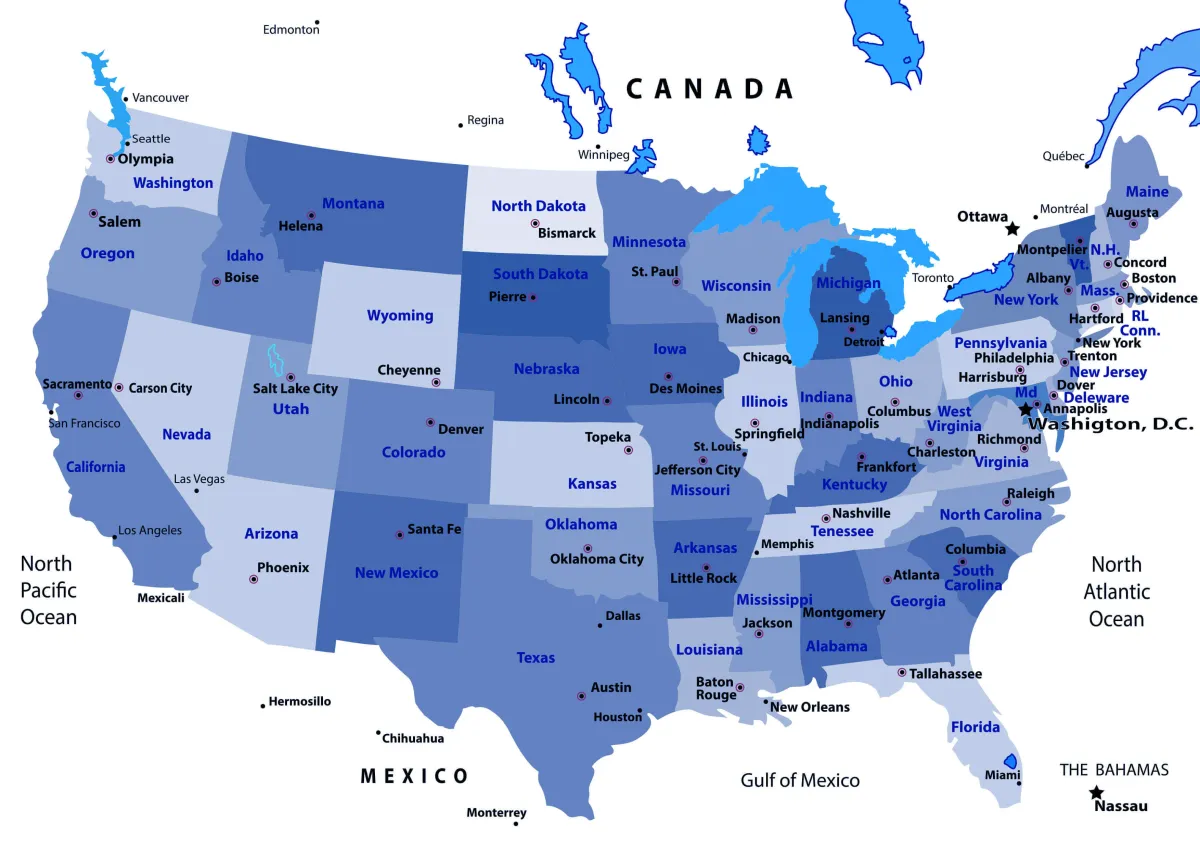 Photo: United States, via www.worldmap1.com
Meanwhile, there are approximately 5.7 million residential swimming pools in the United States. Almost all of them serve one household. Almost none of them are accessible to the kid on the next block.
The water didn't go anywhere. There's more of it than ever, in more places than ever. It just stopped being shared.
The Thing You Can't Measure
Economists can measure the cost of pool access. Researchers can document the closure of municipal facilities. What's harder to quantify is what happens to a community when kids stop having a place where they encounter each other randomly, without their parents' social networks determining who they meet.
The public pool was, among other things, a place where the sorting mechanisms of American life temporarily broke down. You couldn't tell, in the water, whose dad had a corner office and whose dad worked a double shift. You were all just wet and loud and arguing about the same diving board.
That randomness — that accidental mixing — built something. Social researchers call it bridging capital: the connections between people who wouldn't otherwise meet. It's one of the things that makes communities resilient, that makes neighbors feel like neighbors rather than strangers who happen to share a zip code.
We privatized the pool. We got privacy in return. It's worth asking, some years later, whether that was actually the trade we wanted to make.