The Summer That Made You Who You Are Used to Cost a Few Hundred Dollars: What Happened to Affordable Sleep-Away Camp
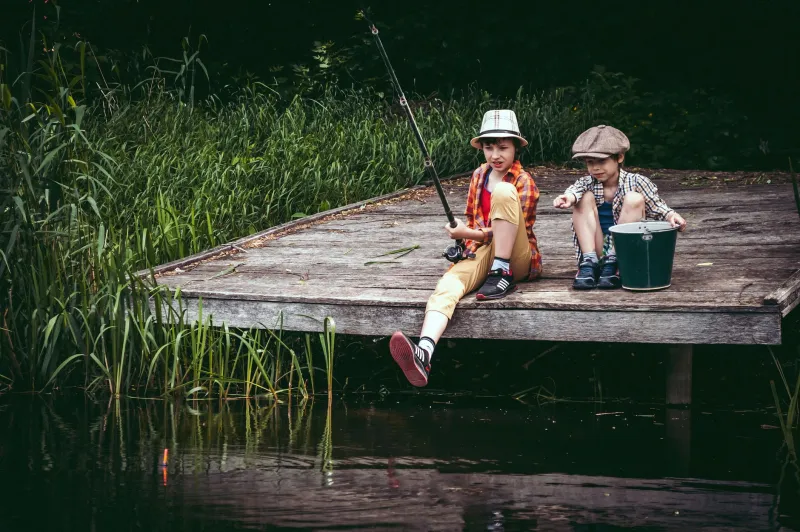
Somewhere in a shoebox in a closet, there's probably a photograph. A gap-toothed kid in a too-big life jacket, squinting at the camera from a dock somewhere in the Adirondacks or the Ozarks or the Poconos. Behind them, a mess hall. A row of wooden cabins. A lake that looked enormous when you were nine.
For millions of American families in the 1950s, '60s, and '70s, that photograph was a middle-class birthright. Sending a kid to sleep-away camp for a week or two wasn't a financial stretch. It was a normal summer plan — the kind of thing a postal worker or a line cook or a school bus driver could budget for without losing sleep. Camp was for everybody's kids.
Today, that same experience — a genuine residential camp with bunks, outdoor activities, and a week away from home — can run $1,500 to $5,000 for a single session. Some specialty camps charge more than that per week. The summer that used to build character now requires a capital investment.
When Camp Was Ordinary
The American summer camp movement goes back to the late 1800s, originally designed as an antidote to city life for children from wealthy families. But through the first half of the twentieth century, it democratized steadily. The YMCA, the Boy Scouts, religious organizations, and municipal park systems all ran affordable residential programs. By the postwar boom years, sleep-away camp had filtered well into working-class life.
Cost was modest and intentionally so. Many camps operated as nonprofits with community missions baked into their founding charters. Sliding-scale fees were common. A week away in the summer of 1965 might run a family the equivalent of $200 to $400 in today's dollars — roughly two weeks of a working father's take-home pay, yes, but manageable with some planning. The cultural expectation that kids should have this experience kept prices grounded.
What did that week buy? A kid learned to be away from home without falling apart. They made friends in an environment with no social hierarchy imported from school. They figured out how to handle a canoe, lose a competition gracefully, and sleep in a cabin with seven strangers. None of that was on the brochure, but all of it was the point.
The Drift Toward Luxury
The shift didn't happen all at once. It crept in through the 1980s and accelerated through the 1990s as American consumer culture sorted nearly everything into tiers. Premium versions of ordinary experiences became the norm across industries, and summer camps were no exception.
High-end camps began competing on amenities: rock climbing walls, horseback riding, recording studios, sailing fleets, and cuisine that bore no resemblance to the mystery meat of camp legend. These programs marketed themselves as formative investments in a child's future — a framing that was hard to argue with and even harder to afford.
As elite camps pushed prices upward and captured cultural attention, the middle of the market thinned. Community-based programs lost funding as municipal budgets tightened. Nonprofit camps that had operated for decades on modest fees found themselves squeezed between rising land costs, insurance requirements, staff wages, and infrastructure maintenance. Many closed quietly. Others raised prices to survive, inadvertently crossing the affordability line for the families they were originally built to serve.
By the 2010s, the American Camp Association reported that roughly half of U.S. children had never attended any overnight camp at all. That number would have been unthinkable in 1968.
What a Week Away Actually Did
There's a reason adults who went to sleep-away camp as kids tend to remember it with unusual clarity. The developmental research on residential camp experiences is pretty consistent: kids who spend time away from home in structured outdoor settings show measurable gains in independence, resilience, and social confidence. They practice navigating conflict without parents nearby to referee. They learn that being uncomfortable — wet, tired, losing, homesick — doesn't mean anything is actually wrong.
Those aren't skills that show up on a standardized test. They're the kind of thing that gets built slowly, in the space between organized activities, when kids have to figure out what to do with themselves. Unstructured time in an unfamiliar environment is the ingredient. It's also, increasingly, the thing that costs money.
Day camps and local programs still exist, and many do excellent work. But they don't replicate the specific alchemy of being genuinely away — out of your neighborhood, out of your normal friend group, out of reach of your parents for days at a time. That distance was the whole mechanism. It's harder to manufacture in a program that ends at 4 PM and puts kids back in their parents' cars.
The Childhood Experience That Became a Product
The irony is that as camp became more expensive, it also became more curated, more scheduled, and in some ways less adventurous. The elite camps of today offer impressive programming, but the spontaneous, slightly chaotic quality of older residential programs — the kind where kids genuinely had to entertain themselves for stretches of the afternoon — has been smoothed away in favor of structured enrichment.
Working-class families didn't lose access to a luxury. They lost access to something genuinely useful — a week of low-stakes independence that used to be considered basic preparation for adulthood, priced within reach of anyone willing to plan ahead.
The kid in that shoebox photograph didn't know they were having a formative experience. They thought they were just at camp. That might have been the best part.