Side One, Track One: When Listening to Music Was Something You Actually Did on Purpose
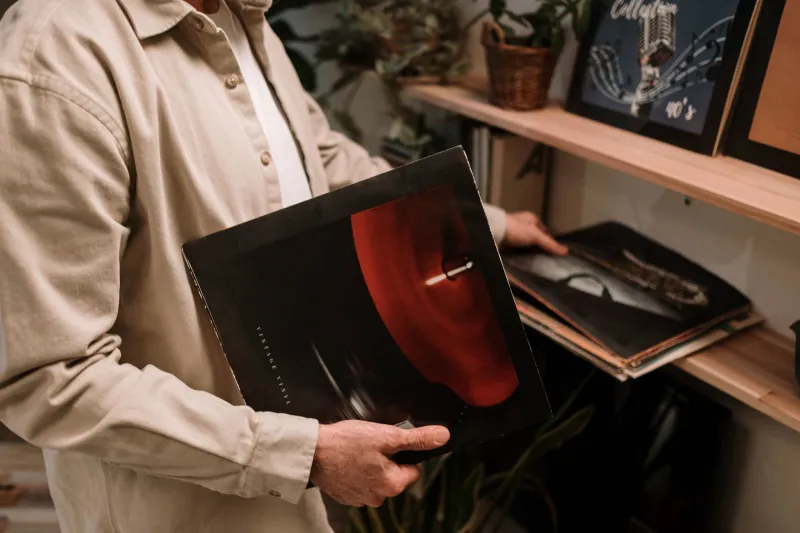
There's a moment — if you're old enough to remember it — when you'd lower a needle onto a record and hear that brief, warm crackle before the first note hit. It wasn't just sound. It was a signal that something was about to begin, and you'd chosen to be there for it.
That feeling is nearly gone now. And with it went something harder to name — a certain quality of attention, a willingness to let music unfold on its own terms instead of yours.
The Ritual That Streaming Deleted
Buying an album in the 1970s, 80s, or even the early 90s was a deliberate act. You went to a record store — a physical place with wooden bins and staff who had opinions — and you made a decision. Maybe you'd heard one song on the radio and wanted to know what else the artist had made. Maybe a friend had pressed the record into your hands and told you to trust them. Either way, you spent real money on a specific object, brought it home, and committed.
Committed to what, exactly? To the whole thing. To the album as a unit. To the sequencing the artist and producer had arranged, often obsessively, because the order of songs on a record was considered part of the artistic statement. You didn't get to shuffle it. You didn't get to skip to track seven without sitting through tracks one through six. And more often than not, that patience was rewarded.
You discovered things. A slow-building track you would have skipped became your favorite song by the third listen. A hidden instrumental led into a closer that hit differently because of everything that came before it. The liner notes told you who played what, who wrote which songs, and sometimes — in the good ones — gave you a small essay or a set of photographs that added another layer to what you were hearing.
Listening wasn't passive. It was participation.
The B-Side You Almost Missed
The concept of the B-side alone says something important about how music used to work. On a vinyl single, the A-side was the commercial bet — the song the label thought would get radio play. The B-side was often where artists put something stranger, more experimental, or more personal. Some of the most beloved songs in rock history started as B-sides. You only found them if you flipped the record over.
That serendipity was built into the format. Discovery required a little effort, a little curiosity, a willingness to engage with the music rather than just consume it.
Album deep cuts worked the same way. The song that didn't get pushed to radio, that didn't appear in any commercial, that only existed as track eight on side two — those were often the songs that meant the most to the people who found them. They felt like secrets. Like something between you and the artist.
What Streaming Got Right (And What It Cost)
None of this is to pretend that the old model was without friction. Records were expensive. If you bought an album based on one single and hated everything else on it, you were out of luck and out of money. Access was limited by geography — if you lived somewhere without a good record store, your options were narrow. And there's something genuinely wonderful about having forty million songs available on a device in your pocket.
Streaming democratized music in real ways. Artists who never would have found an audience through traditional radio or retail now reach listeners across the world. Genres that were once regional or niche are now globally accessible. The discovery algorithms, for all their impersonality, do occasionally surface something you'd never have found on your own.
But the cost has been a kind of attentional collapse. When the next song is always one tap away, the incentive to stay with something challenging disappears. When an algorithm decides what plays after your current track, the act of listening becomes something that happens to you rather than something you choose. Music becomes ambient — always present, rarely centered.
Streaming data consistently shows that listeners skip songs within the first thirty seconds at staggering rates. Artists now design their music accordingly, front-loading hooks and avoiding slow builds because the algorithm punishes anything that doesn't grab immediately. The format is shaping the art in ways that would have been unthinkable when a producer spent weeks sequencing a forty-minute record.
The Album as a Lost Form
Ask most people under thirty what their favorite album is, and you'll often get a blank look or a playlist name. The album — as a cohesive artistic statement, as something meant to be experienced from beginning to end — has quietly lost its cultural authority.
There are still artists making albums with that kind of intentionality. But the environment in which those albums land has changed completely. A carefully sequenced record released in 2024 will be immediately dismembered by playlist algorithms, shuffled into someone's workout mix, or heard one track at a time on a social media clip with the context stripped away.
The turntable demanded something from you. It asked you to sit down, to pay attention, to follow where the music led. That wasn't a limitation. It was an invitation — to hear an artist the way they intended to be heard, from the first crackle to the last fade.
Convenience is real and valuable. But it came with a quiet trade-off. We got music everywhere, all the time. We just stopped listening.