The Usher Knew Your Name: When Going to the Movies Was Actually an Event
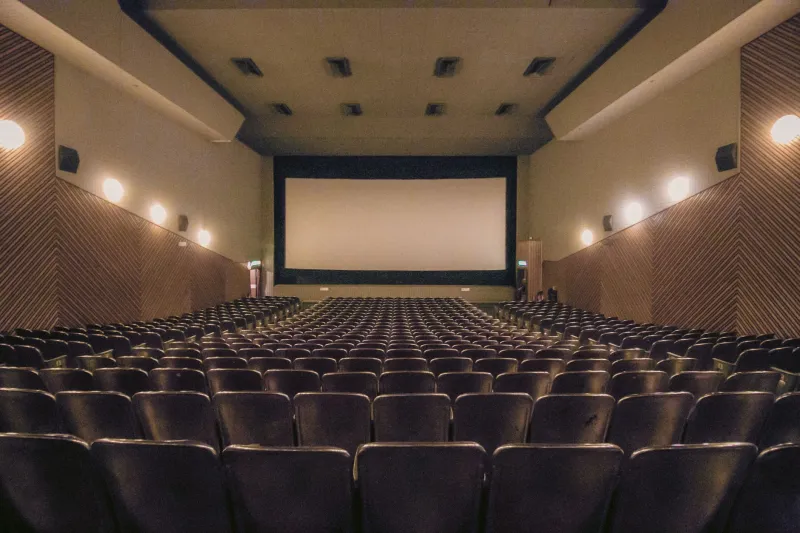
Somewhere in your city right now, there's a 14-screen multiplex sitting inside a mall or a retail strip, its lobby smelling of artificial butter and carpet cleaner, its staff cycling through shifts with the quiet efficiency of airport workers. You buy your ticket on an app, you scan a barcode at a kiosk, and you find your reserved seat in a room that could be in any city in America. The movie is fine. The experience is forgettable.
It wasn't always this way. For most of the 20th century, going to the movies was an event — not in the grand, occasion-wear sense, but in the sense that it was a specific, rooted experience tied to a specific place and the people who ran it. The theater was a community institution. The staff were part of the neighborhood. And the act of going was about far more than just watching a film.
The Palace Era and What It Meant
In the 1920s through the 1950s, American cities were dotted with what the industry called "picture palaces" — grand, ornate single-screen theaters with names like The Rialto, The Majestic, or The Bijou. These weren't just venues. They were architectural statements. Lobbies with chandeliers, velvet curtains, carpets thick enough to muffle every sound. Ushers in uniforms who escorted you to your seat with a flashlight and genuine courtesy.
The usher role is worth dwelling on. In the picture palace era, ushers were trained employees — often young men working their way up in the theater business — who took real pride in their position. They knew the regular patrons. They managed the room with quiet authority. They were the human face of an institution that understood it was selling an experience, not just a seat.
Theater managers in this era were often civic figures. They chose which films to show, managed relationships with studios and distributors, and made programming decisions based on what they knew their community wanted to see. A manager who'd run the same downtown theater for 15 years knew his audience intimately. He'd hold over a film that was packing the house. He'd take a chance on a foreign picture if he thought his regulars were ready for it. Programming was a curatorial act, not an algorithmic one.
The Neighborhood Theater and the Saturday Ritual
Beyond the grand picture palaces, most American neighborhoods had their own smaller theaters — the kind of place where a Saturday matinee was a childhood institution. These were typically 300-to-600-seat single-screen theaters, often family-owned, tucked into commercial strips alongside the hardware store and the diner.
The ritual of the neighborhood movie house was deeply social. You went with friends and sat through a double feature and maybe a serial. The concession stand was a simple affair — popcorn, candy, a soda. The prices were modest enough that a kid with a few dollars of allowance could make a full afternoon of it. The staff recognized the regulars. The owner might be behind the concession counter himself on a slow Tuesday.
This wasn't nostalgia-bait. It was genuinely different in structure. The economics of the neighborhood theater required repeat business from a fixed local audience, which meant the relationship between the theater and its patrons was ongoing and personal. You couldn't afford to give a bad experience because you'd see the same people next weekend.
How the Multiplex Changed Everything
The multiplex model emerged in the late 1960s and accelerated through the 1970s and 80s. The logic was straightforward: instead of one screen showing one film to a full house, you could have eight or twelve screens showing eight or twelve films simultaneously, dramatically increasing revenue per building and reducing the risk of any single film underperforming.
For studios, the multiplex was a gift. Wider releases meant faster box office returns. For chains, the model rewarded scale — the more screens you operated, the more leverage you had with distributors. For the audience, it meant more choices under one roof. On paper, everyone won.
But something structural changed. The multiplex didn't need a curatorial manager — it needed an operations manager. Programming decisions moved to regional and national headquarters, driven by studio relationships and booking algorithms rather than local knowledge. The usher became a teenager earning minimum wage with no particular investment in the experience. The theater stopped being a community institution and became a unit in a chain.
By the 1990s, the neighborhood single-screen theater had been largely wiped out. The chains — AMC, Regal, Cinemark — consolidated the market with aggressive expansion, often in suburban malls where real estate was cheap and parking was abundant. The picture palaces of downtown America were converted into parking lots, churches, or condos. A few survived as art houses, clinging to the margins.
The Concession Trap and the Experience Vacuum
Here's the economic reality that explains a lot about why today's multiplex feels the way it does: studios take a substantial cut of ticket revenue — often 50 to 60 percent in a film's opening weeks. Theaters make their real money on concessions, where margins run as high as 85 percent on popcorn and soda.
This creates a perverse incentive structure. The actual movie — the reason you came — is largely a loss leader designed to get you through the door so you'll spend $18 on a large popcorn and a Coke. The experience of watching the film is secondary to the concession transaction. That's why theaters are designed the way they are: the concession stand is enormous, unavoidable, and staffed heavily, while the auditorium itself is an afterthought.
The streaming revolution, accelerated by the pandemic, made this calculus even more brutal. When Netflix, HBO Max, and Disney+ can deliver a new release to your living room for a fraction of the cost of a night out, theaters have to compete on experience. And most of them, structurally and culturally, are not equipped to do that.
The industry's response has been to double down on premium formats — IMAX, Dolby Cinema, recliner seating, dine-in concepts. These are genuine improvements in comfort and presentation. But they're not the same thing as the experience that was lost. Recliner seats don't replace a manager who knows which film his neighborhood will love. A dine-in menu doesn't recreate the social ritual of a Saturday matinee at a theater that's been part of your community for 30 years.
What's Actually Gone
A handful of independent theaters are still out there — the Alamo Drafthouse chain built a devoted following on the idea that the theatrical experience could be curated and protected. Small art houses in college towns and urban neighborhoods maintain something of the old spirit. But they're the exception, operating against powerful economic headwinds.
What's really gone isn't the technology or even the comfort — today's best theaters are technically superior to anything from the 1950s. What's gone is the sense of place. The feeling that this particular theater, in this particular neighborhood, was yours. That the people running it knew you, cared about what they were showing, and took pride in the experience they were offering.
That's a harder thing to rebuild than a bigger screen. And so far, nobody's figured out how to sell it at the concession stand.